

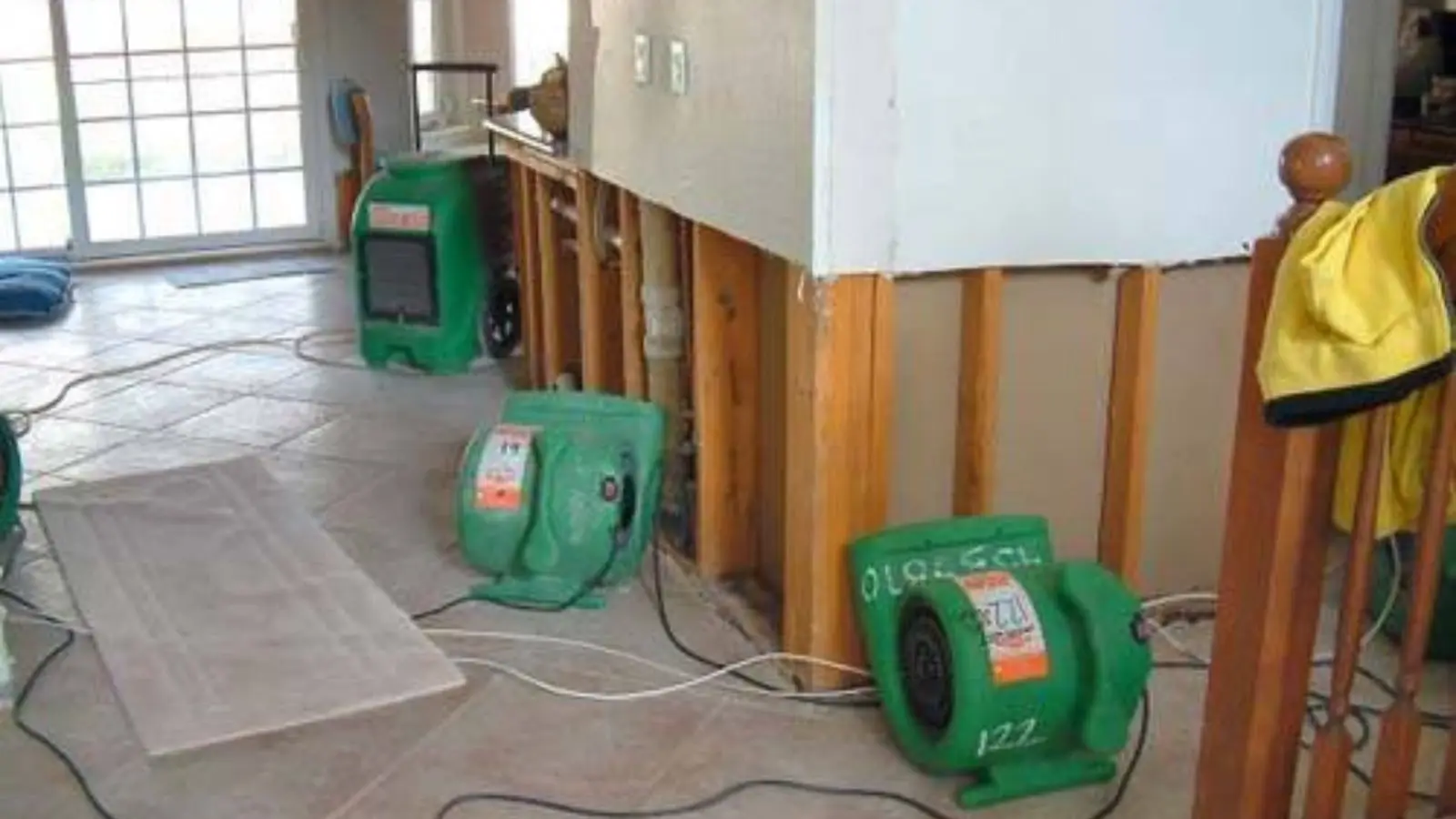
What water mitigation means in La Verne, CA
Water mitigation in La Verne, CA means limiting how far water travels and how long materials stay wet, so a bad day does not turn into a rebuild. Every hour matters. Our dispatch line is staffed 24/7, and while you wait for a crew there is plenty you can do to slow the damage.
Find the source and stop it. Shut the main water valve if a supply line or fixture failed. Switch off power to wet areas only if you can reach the panel without stepping in water. Lift rugs, laptops and papers onto dry surfaces, and keep people and pets away from anything that might be contaminated.
Mitigation is different from repair. Mitigation stops and dries. Repair rebuilds drywall, flooring and paint afterward, which is covered on the water damage repair page.
Why is my wall wet but I can't find a leak?
A wall can stay wet long after the visible water is gone, because water wicks up drywall, soaks into insulation and runs along framing to a spot far from the source. A leaking pipe inside a wall, a failed shower pan or a roof leak that travels down a stud can all do this.
The trade term for locating and stopping that hidden spread is water mitigation. A crew uses a moisture meter and a thermal camera to map where water actually sits, then sets drying equipment to match the map instead of guessing.
Signs you need mitigation now
Some signs are obvious and some arrive days later. If you see any of the following, treat it as active damage until a moisture reading says otherwise.
- Standing or pooling water on any floor, including under cabinets or behind appliances
- Drywall that feels soft, cool or damp, or paint that bubbles and peels
- Ceiling stains that grow, sag or drip after rain or after a bathroom is used upstairs
- Flooring that lifts, buckles or cups, or carpet that squishes underfoot
- A musty smell that returns even after you clean the area
- A water meter that keeps moving when every fixture in the home is off
Any of these can be a sign of water inside a cavity you cannot see. A same-day assessment is far cheaper than finding out about it a month later.
How the first 24 to 72 hours work
- 1
Stop the source
Close the main valve or the fixture shutoff, and make the area safe. If water is near outlets or the panel, stay out and call the utility or 911 first.
- 2
Extract standing water
Pumps and extraction units pull bulk water from floors and carpet. Getting it out early shortens everything that follows.
- 3
Map the moisture
Moisture meters and a thermal camera show wet drywall, subfloor and framing. Readings are logged so drying progress can be checked later.
- 4
Set up drying
Air movers and LGR dehumidifiers go in, wet materials that cannot be saved are removed, and readings are taken again until the structure reaches its dry standard.
Structural drying: getting water out of walls, floors and framing
Structural drying is the longest and most technical part of mitigation. Surface water is easy to see. The water that matters is in subfloor, wall cavities, baseboards and the bottom of studs, where it can sit for weeks and feed mold or rot.
Air movers push dry air across wet surfaces to lift moisture off them. LGR dehumidifiers then pull that moisture out of the air so it does not just settle back into the drywall. In a wall that is wet inside, small holes or removed baseboards let air reach the cavity.
Drying time depends on the materials, how much water got in, and the conditions in the home. It is often a few days, and dense materials like hardwood or thick subfloor can take longer. Crews check readings each visit and move or remove equipment as areas reach dry, rather than leaving machines running on a guess.
Electrical and sewage safety: stay out
If water is touching outlets, appliances or the panel, do not step into it. Call your electric utility or 911 for any electrical or gas risk before you call us. If the water came from a toilet, drain or sewer line, treat it as contaminated: keep children and pets out and do not wade through it. Once the area is safe, call our 24/7 line and we will send a crew.
Water categories and what they change
The category of water decides how much material can be dried in place and how much has to be removed. Crews follow the categories in the ANSI/IICRC S500 water damage standard, and you can ask any company whether its crews work to it.
| Category | Typical source | What it usually means for the job |
|---|---|---|
| Category 1 | Broken supply line, overflowing sink with clean water | Drying in place is often possible if started quickly |
| Category 2 | Dishwasher or washing machine discharge, aquarium overflow | Carpet pad and some porous materials are usually removed |
| Category 3 | Sewage, rising groundwater, long-standing wet materials | Contaminated porous materials come out and surfaces are sanitized |
Water can move down a category if it sits. Clean water left in a wall for days is no longer treated the same as water caught in the first hours.
Same-day dispatch is available, including nights and weekends, with response depending on conditions. Tell us what failed and what is wet, and we will explain the first steps.
What affects the cost of mitigation
No honest company can name a total before seeing the water. These are the factors that move a mitigation bill up or down.
| Factor | What changes it |
|---|---|
| Water category | Clean, gray or contaminated water changes how much material is removed and how it is handled |
| Affected area | Square footage and how many rooms and floors the water reached |
| Materials | Carpet, hardwood, drywall, insulation and subfloor dry at different rates, and some cannot be saved |
| Drying days and equipment | How many air movers and dehumidifiers run, and for how many days |
| Rebuild scope | What has to be replaced after drying, which is priced separately |
Your own scope depends on what the moisture readings show.
Insurance and documentation
Sudden and accidental water damage is often covered by homeowners policies. Long-term leaks and neglect often are not, and flood damage is usually excluded and needs separate flood coverage. Check your policy and ask your insurer what applies to you.
California's Department of Insurance advises reporting water damage to your insurer promptly, taking reasonable steps to protect the property, and keeping receipts. Do not discard damaged items or make extensive permanent repairs before the adjuster has had a chance to inspect. Call us for your own scope and a clear explanation of the price.
- Photograph and video every wet room and item before anything is moved
- List damaged belongings with a rough age and value
- Keep a log of calls and copies of all correspondence with your insurer
- Save receipts for emergency steps you took
- Ask for written line-item bids from any contractor you consider
Check any contractor's licence on the CSLB website. California requires a licence when a job totals $1,000 or more in labor and materials, or needs a permit.
Your water shutoff and the City of La Verne utility
La Verne homes are served by the city's own water utility. The City's 2025 water quality report says about 24 percent of supply is local groundwater from city wells and about 76 percent is purchased from Three Valleys Municipal Water District.
For you the practical point is simple. The main valve at your home is yours to close, and it is the fastest way to stop a supply-side leak. The city publishes no separate water emergency line, so for questions about the meter or street-side supply, call city utilities customer service at (909) 596-8744.
Source: City of La Verne, 2025 Water Quality Report (city utilities department).
Who we send and what to expect
We run a dispatch line that sends licensed and insured restoration professionals to La Verne homes. Crews arrive with extraction units, moisture meters, thermal cameras, air movers and LGR dehumidifiers, and they explain readings in plain words.
Once the structure is dry, you may need cleanup of debris and contaminated materials, which the water damage cleanup page covers. If the water came from a storm or ground source, see flood damage restoration. Nearby homes in San Dimas and Claremont are also on our dispatch map.
Water mitigation questions in La Verne
Yes. Our dispatch line is answered 24/7, including nights, weekends and holidays. How fast a crew reaches you depends on conditions and demand, so we do not promise an arrival time. We will tell you what to do while the crew is on the way.
Water often travels inside the wall from a pipe, shower or roof leak and shows up far from the source. A moisture meter and thermal camera can trace it without opening everything. Shut off the main valve and call if the wall keeps feeling damp.
Mitigation stops the damage and dries the structure. Repair rebuilds what had to be removed, such as drywall, flooring and paint. Most jobs need mitigation first, so repairs are not done over wet materials.
It is often a few days, depending on materials, how much water got in and the conditions in the home. Dense materials can take longer. Readings are taken each visit so drying ends when the structure is actually dry.
Only if you can reach the panel without standing in water. If water is near outlets or the panel, stay out and call the utility or 911 for any electrical risk before calling us.
Sudden and accidental damage is often covered, long-term leaks often are not, and flood is usually excluded without separate coverage. Check your policy, report the loss promptly and keep receipts. Your insurer makes the coverage decision.
Mold needs moisture, so wet materials left alone for days raise the risk. Fast extraction and drying are the best way to limit it. If you already see growth, read about mold remediation and call us.
Lift small items and valuables onto dry surfaces if it is safe. Leave heavy furniture to the crew. Moving large pieces through wet or contaminated areas can cause injury and spread water.