

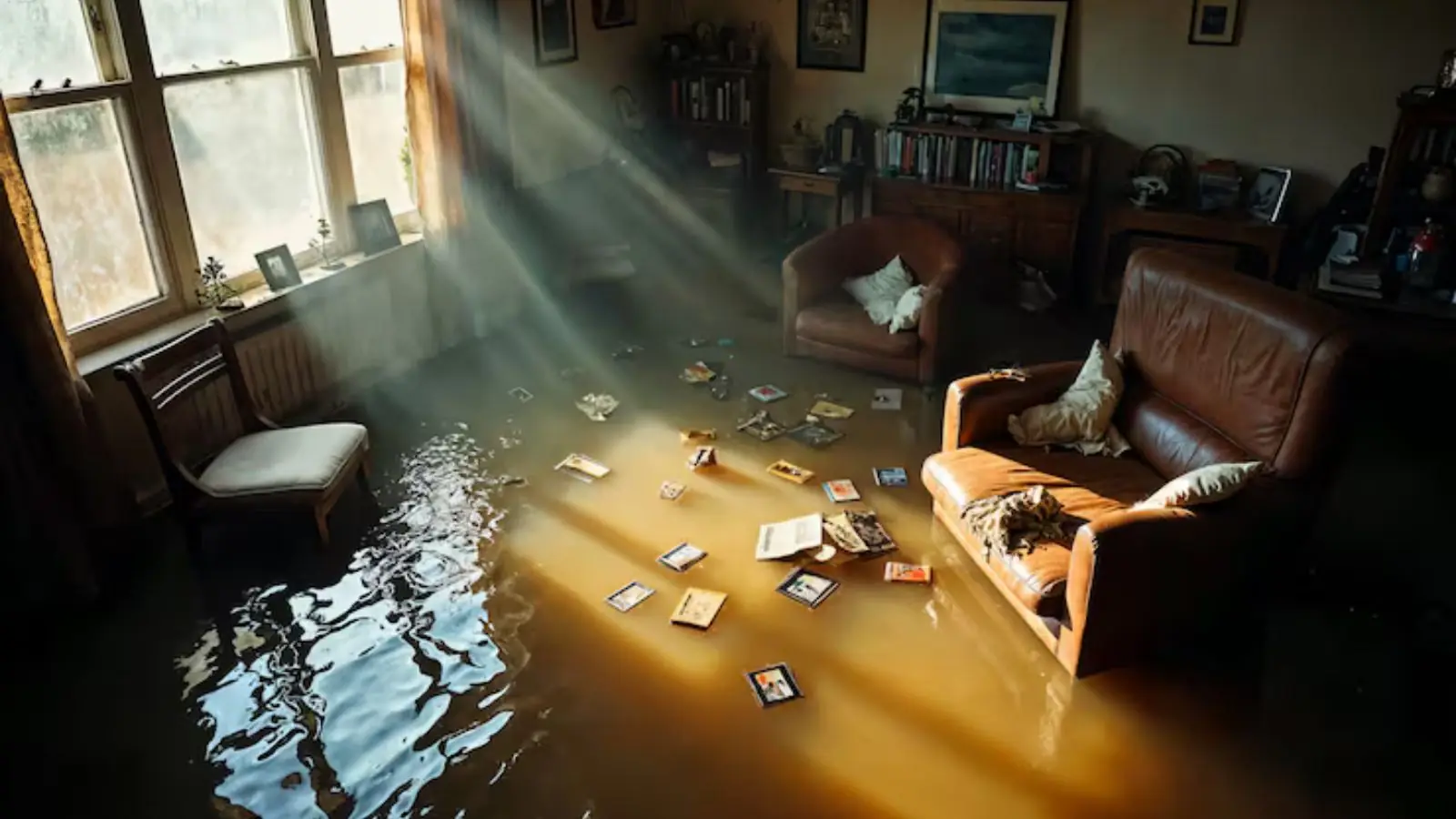
Water Damage Restoration in La Verne, CA
Water on the floor at 2 a.m. or a stain spreading across the ceiling? Our 24/7 emergency line sends licensed and insured crews to La Verne and the nearby towns of San Dimas, Claremont, Pomona, Glendora and Covina.
- Licensed and insured
- Scope and price explained before work starts
- Same-day response when available
How dispatch works
Emergency water damage restoration for La Verne homes and businesses
Water damage restoration is the work of stopping water, removing it, drying the structure and rebuilding what could not be saved. In La Verne, CA that usually starts with a phone call about a burst supply line, a failed water heater, an overflowing washer, a roof leak after a storm or a ceiling stain that keeps growing. Our emergency line is open 24/7, so the call can happen at midnight or on a holiday.
Speed matters because wet drywall, carpet pad and framing start to break down quickly, and mold needs only moisture and time. The sooner water is shut off and extraction starts, the more of the building can usually be dried in place instead of torn out.
We are a dispatch line, not a showroom. You describe the loss, a coordinator explains the next steps and how scope and price will be set before work begins, and a licensed and insured crew is sent when one is available. Same-day response is the goal, though arrival depends on the crew's schedule and conditions on the road.
What we handle in La Verne
Pick the page that matches your situation. Each one explains the process, the equipment and what drives the scope, with no surprises on price.
Emergency Water Removal
Standing water from a burst pipe or overflow, removed with pumps and extraction units. Start at emergency water removal if water is still on the floor.
Water Mitigation
Moisture mapping, air movers and dehumidifiers to dry the structure. Read about water mitigation when the water is stopped but the walls are wet.
Flood Damage Restoration
Storm and groundwater intrusion, including sewage backups. See flood damage restoration for Category 2 and 3 water.
Water Damage Cleanup
Debris removal, sanitizing and deodorizing. The water damage cleanup page covers the first 48 hours.
Water Damage Repair
Drywall, insulation, flooring, paint and cabinets after drying. Water damage repair is the rebuild step.
Mold Remediation
Containment and removal when moisture has already fed mold. Mold remediation explains testing, removal and clearance.
If water is still spreading, do this first
These steps are safe for most homeowners and they limit the damage while you wait for the crew. Safety comes before belongings.
- Stop the sourceShut the fixture valve or the main water valve. If you do not know where the main valve is, find it before the next leak.
- Think about powerTurn off power to wet areas only if you can reach the panel without stepping in water. Water near outlets or the panel means stay out of the room and call the utility or 911 before anyone else.
- Lift what you canMove small furniture, electronics, rugs and papers off wet floors. Leave heavy items for the crew.
- Keep people and pets outWater that came from a toilet, drain or outdoors can carry contamination. Treat it as unsafe to touch.
- Photograph before cleanupTake wide and close photos of the damage and the source. They help with any insurance claim later.
- Call the 24/7 lineA coordinator will walk through what is wet and what to do next, any hour of the day.
Call the dispatch line and a coordinator will take the details.
From first call to finished repair
- 1
Call dispatch
Describe what happened, where the water came from and what is wet. We ask about safety first.
- 2
Assessment
The crew checks moisture with meters and thermal imaging, then explains scope and price before work starts.
- 3
Mitigation
Extraction, air movers and dehumidifiers go in. Wet material that cannot dry is removed.
- 4
Restoration
Once readings are dry, drywall, flooring and paint are repaired. Mold work is handled separately if it is found.
Water categories and what they change
The category of water decides how much material can be saved. Restoration crews classify water using the published ANSI/IICRC S500 standard, and you can ask any company whether its crews work to it.
| Category | Typical source | What it means for the cleanup |
|---|---|---|
| Category 1 | Supply line, faucet, water heater, rain through a fresh roof leak | Cleanest water. Extraction and drying usually save drywall, flooring and cabinets if started quickly. |
| Category 2 | Washing machine or dishwasher discharge, toilet overflow with urine only | Contaminated. Carpet pad and porous material are often removed, hard surfaces cleaned and sanitized. |
| Category 3 | Sewage, river or groundwater flooding, standing water that sat for days | Grossly contaminated. Affected porous material is removed and the area is sanitized. Stay out until trained crews arrive. |
Water gets worse with time. Category 1 water left wet for days can become Category 2 or 3.
What La Verne tap water means for leaks and stains
The City of La Verne runs its own water utility. Per the City's 2025 water quality report, roughly a quarter of the supply is pumped from city wells and the rest is bought from Three Valleys Municipal Water District, whose water is treated at the Miramar plant. The same report lists hardness of 351.7 ppm as calcium carbonate for city groundwater and 97 ppm for the Three Valleys water.
That has a practical side. Harder water leaves white mineral crust where it weeps, so a crusty line under a faucet, around a toilet supply or on a water heater fitting is worth a look before it turns into a soaked cabinet. Crust does not prove a leak, but a damp crust does.
If you ever lose pressure or see discolored water at every tap, that is a supply question for the City's utilities office at (909) 596-8744, not a restoration question. If the water is inside your walls, shut your own main valve and call us.
Call the dispatch line and describe the loss. A coordinator will explain how the work is scoped and priced.
What drives the cost of water damage work
We do not quote exact prices on a web page because every loss is different. These are the factors that set the scope, and they are what the crew will walk through with you.
| Factor | What changes it |
|---|---|
| Water category | Category 1, 2 or 3 decides what can be dried and what must be removed. |
| Affected area | Square footage and the number of rooms and floor levels the water reached. |
| Materials | Hardwood, carpet, drywall, insulation and cabinets dry and fail differently. |
| Drying time and equipment | More air movers and dehumidifiers and more days on site raise the scope. |
| Rebuild scope | Drywall, flooring, paint and trim repair after drying is a separate step from mitigation. |
Want your own scope and price explained? Call the dispatch line and describe the loss.
Insurance and your claim, in general terms
Sudden and accidental water damage, such as a burst pipe, is often covered by a homeowners or renters policy. Slow leaks and neglect often fall outside coverage, and floods typically need their own flood policy. Read your policy or ask your insurer, because wording varies.
The California Department of Insurance advises policyholders to report damage promptly, take reasonable steps to protect the property, keep receipts, and photograph and list damaged items. It also suggests not discarding damaged items or making extensive permanent repairs until the adjuster has had a chance to inspect.
Our crews document the loss with photos, moisture readings and a written scope you can hand to your insurer. We cannot promise a claim will be approved, and we do not speak for your carrier.
Where we dispatch around La Verne
Our home base is La Verne, ZIP 91750, on Foothill Boulevard. The same emergency line covers the nearby towns, and each has its own page with local water, utility and permit details. Crews are sent to San Dimas (91773) and Claremont (91711) on either side of La Verne.
To the south and west we also serve Pomona (91766, 91767 and 91768), Glendora (91740 and 91741) and Covina (91722, 91723 and 91724). The service area page lists every town in one place.
Permit questions for rebuild work go to your city. For La Verne residents, City Hall is at 3660 D Street, and the building department can tell you whether your repair needs a permit. Rules vary by city and by project, so ask before the drywall goes back up.
Restoration is not waterproofing
Callers sometimes ask whether we can stop water from coming in through a foundation or a failing drain. Restoration dries and repairs what water already damaged. It does not waterproof a foundation, regrade a yard or replace a roof.
If the same wall keeps getting wet, fixing the source is a separate job for the right trade, such as a plumber, roofer or drainage contractor. We will tell you plainly when that is the case, and our crews can dry and repair after the source is fixed.
Water damage questions from La Verne homeowners
Yes. The dispatch line is answered 24/7, including nights, weekends and holidays. A coordinator takes the details and arranges a crew, and arrival depends on the crew's schedule and conditions, so we do not promise a specific time.
As soon as the source is stopped. Wet drywall, carpet pad and framing begin to deteriorate quickly and mold needs only moisture and time, so drying that starts the same day usually saves more material than drying that starts days later.
It depends on the water category, affected area, materials, drying time and rebuild scope. We explain the scope and price before work starts, and the cost table above shows what moves the number.
Sudden and accidental damage is often covered and gradual leaks often are not. Flood damage usually needs separate flood coverage. Check your policy or ask your insurer, and keep photos and receipts from the first hour.
Yes. Call the dispatch line and a crew can assess the area with moisture meters and thermal imaging, then explain what needs to be dried, removed or repaired and how the work will be priced.
Often a few days, but it depends on the materials, the amount of water and the conditions. The crew checks moisture readings each visit and removes equipment only when readings show the structure is dry.
No. Restoration dries and repairs water damage. Waterproofing, drainage and roof work are separate trades, and we will say so if that is what your problem needs.
We serve La Verne 91750, San Dimas 91773, Claremont 91711, Pomona 91766, 91767 and 91768, Glendora 91740 and 91741, and Covina 91722, 91723 and 91724. Call the line and give your address to confirm.
Damage spreading right now?
Call the dispatch line, say what is wet and where the water is coming from, and a coordinator will tell you what to do next while a crew is arranged.
Call (626) 879-0276