

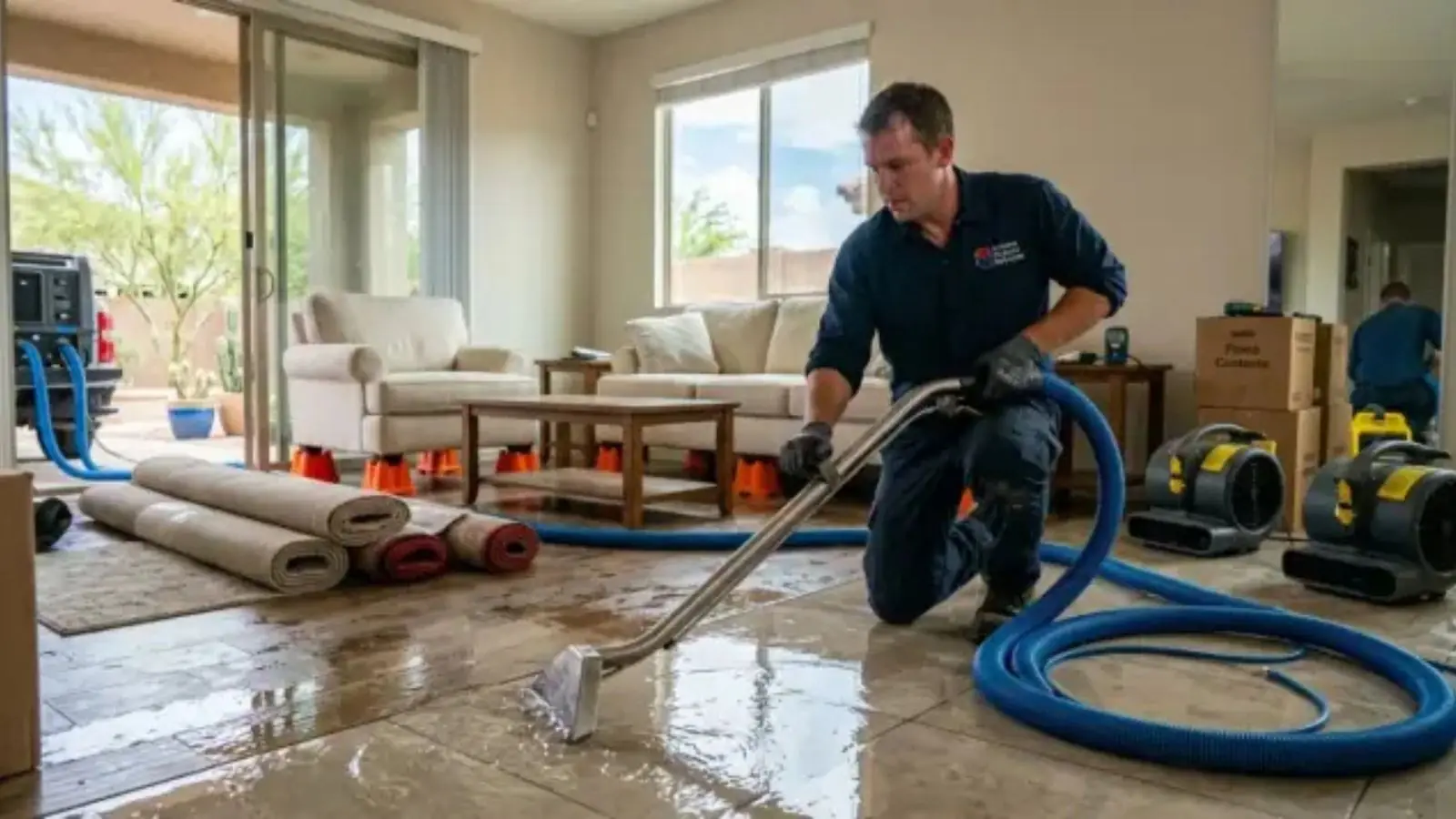
When water is standing in your home right now
Every hour water sits, it wicks further into drywall, carpet pad and subfloor. Our dispatch line runs 24/7, so call as soon as you can. Emergency water removal in La Verne, CA means pumping and extracting standing water with powered equipment before drying begins.
While you wait, do what is safe. Stop the source if you can find it, and shut the main water valve. Cut power to wet areas only if you can reach the panel without stepping in water. Lift valuables, books and electronics off the floor, pull up rugs, and keep children and pets away from any water that may be contaminated.
Electrical and gas risk comes first
Do not enter a room with standing water if outlets, appliances or cords are submerged, and never touch the panel with wet hands or while standing in water. If you smell gas or see sparking, leave and call 911 or your utility before calling us. Stay out of water that came from a toilet or sewer line.
How extraction works, from pump to damp-dry
Crews start by finding the water level and its source. Submersible pumps handle deep water, and truck-mounted or portable extraction units pull water from carpet, pad and hard floors. A moisture meter then maps how far the water traveled into walls and subfloors, and a thermal camera flags wet areas you cannot see.
Removal is only the first half. Air movers and LGR dehumidifiers then dry the structure, and readings are repeated until framing and subfloor reach normal levels. That drying phase usually runs a few days, depending on materials and conditions. For the full stabilization process, see water mitigation.
What happens after you call
- 1
Dispatch
You describe the water, its source and any safety concerns, and we send a crew. Response depends on conditions, so we give no fixed arrival time.
- 2
Stop and assess
The crew confirms the source is off, checks for electrical hazards and sorts the water by category.
- 3
Extract
Pumps and extraction units remove standing water, and wet carpet pad or other unsalvageable material is pulled.
- 4
Set up drying
Air movers and dehumidifiers go in, readings are logged, and the crew returns to confirm the structure is drying.
Burst Pipe Water Damage
A burst pipe can release gallons every minute, so the water valve is the most urgent job. Shut the main valve, then open a faucet at the lowest point of the house to drain pressure from the line. If you cannot find or turn the valve, call the City of La Verne utilities customer service for supply questions.
Ceilings are the hidden risk. Water pooling above drywall can bring the ceiling down, so keep out from beneath bulging or dripping areas and place buckets under active drips. Photograph the damage before you move anything.
After hours or on a weekend, call us and we will dispatch for same-day extraction when conditions allow. The pipe itself needs a licensed plumber, and the crew coordinates extraction so drying can begin before the repair is finished. Check your policy, because sudden and accidental bursts are often covered while long-term leaks often are not.
Water categories change the job
Where the water came from decides what is safe to keep and how crews protect themselves.
| Category | Typical source | What it means |
|---|---|---|
| Category 1 | Supply line, faucet, tub overflow | Cleanest water, but it can degrade to Category 2 if left standing |
| Category 2 | Washing machine or dishwasher discharge | Contains contaminants, so carpet pad is usually discarded |
| Category 3 | Sewage, rising floodwater | Grossly contaminated, so porous materials are removed. See flood damage restoration |
Signs the water has gone beyond the visible puddle
Surface water is only part of the problem.
Check for these
- Carpet that squishes underfoot, even where it looks dry
- Baseboards or walls that feel cool and damp
- Paint bubbling or drywall softening above a floor that was wet
- A musty smell that appears within a day or two
- A water meter that keeps moving when every fixture is off
Call the 24/7 line. A dispatcher will ask a few questions and send a crew with the right equipment.
What affects the cost of water removal
A price depends on the job in front of the crew, but these factors drive it.
| Factor | What changes it |
|---|---|
| Water category | Cleaner water means less disposal and protective work |
| Affected area | More rooms and more square footage mean more extraction time |
| Materials | Carpet, pad, hardwood and drywall each dry or fail differently |
| Drying days and equipment | Each air mover and dehumidifier adds equipment time |
| Rebuild scope | Removal is separate from repair, covered under water damage repair |
Document the loss for your insurer
California's Department of Insurance advises reporting water damage promptly and protecting the property from further loss.
Before and after extraction
- Photograph and video the water before it is removed
- List damaged items and keep them until the adjuster inspects
- Keep receipts for emergency services
- Log every call and keep written correspondence
Dispatch for La Verne and nearby towns
We send licensed and insured restoration professionals to La Verne, with nearby coverage for San Dimas and Claremont. Overnight and holiday calls reach the same dispatch line as daytime ones. Ask any company whether its crews work to the ANSI/IICRC S500 standard for water damage. If the water came from outside or from a sewer line, our flood damage restoration page covers that.
Emergency water removal questions
Yes. The dispatch line is open 24/7, including nights and weekends. How soon a crew arrives depends on conditions and call volume, so we do not promise an arrival time, but we do dispatch same-day when we can.
Shut the main water valve, then cut power to wet areas only if you can reach the panel dry. Move valuables up off the floor and keep people and pets away from contaminated water. Then call.
Carpet and drywall begin absorbing right away, and the longer water sits, the more material has to be replaced. Mold needs moisture, and a damp structure left undried gives it that.
For a small clean spill, yes. A household wet vac cannot handle deep water or soaked pad, and it should not be used near standing water with electrical risk. Call a crew for anything larger.
Sometimes the carpet can be dried in place, but the pad usually cannot. Category 2 or 3 water usually means both go. The crew checks and explains before removing anything.
Sudden and accidental bursts are often covered, while long-term leaks and neglect often are not. Check your policy and ask your insurer, and keep photos and receipts.