

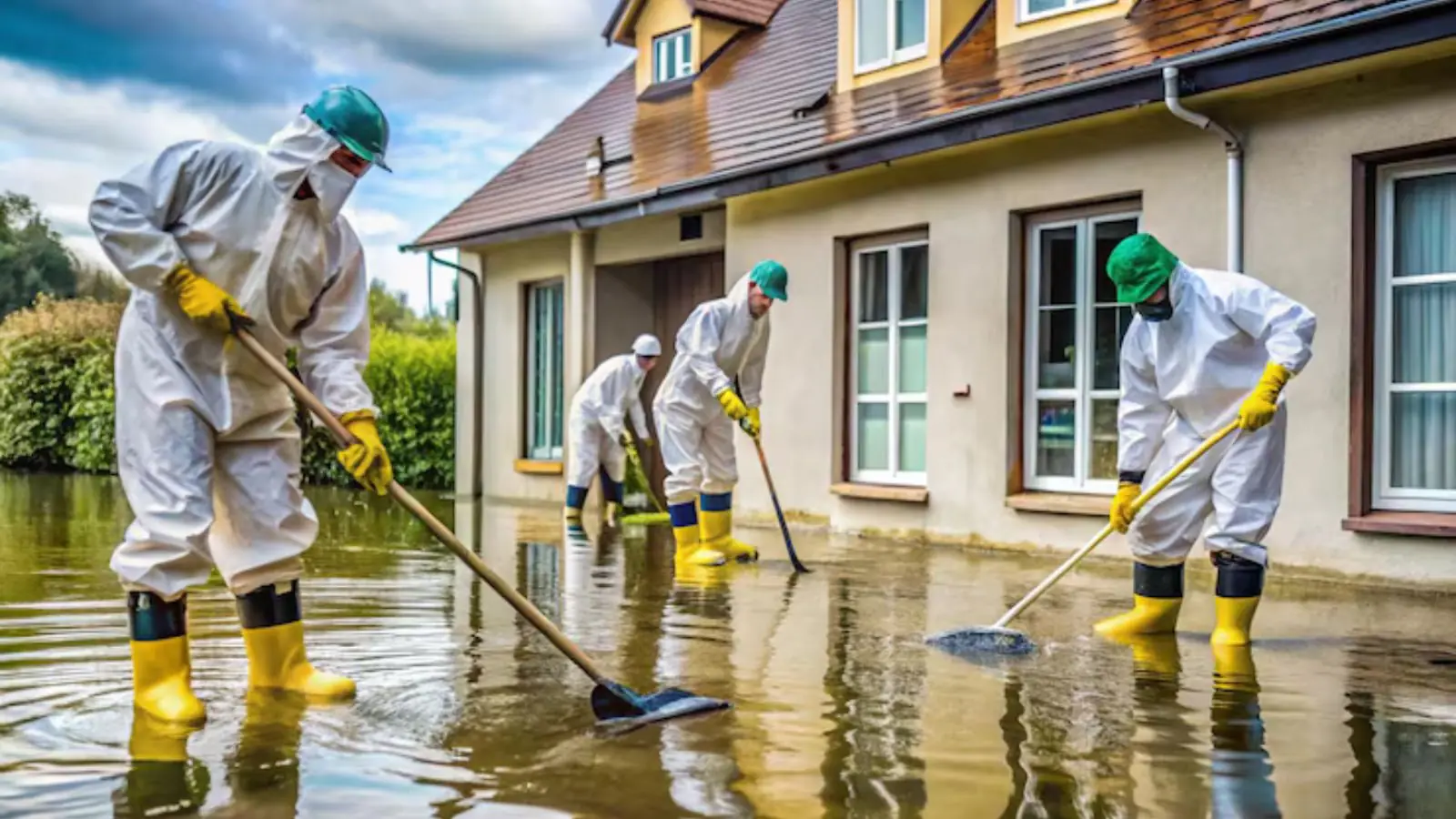
When floodwater is already inside your home
Floodwater carries soil, bacteria and debris, so treat it as unsafe from the first minute. Flood damage restoration in La Verne, CA is the removal, drying and sanitizing work that follows storm water, groundwater or a sewer backup. Our dispatch line is open 24/7, so call as soon as you can.
While you wait, stop what you can. Shut the main water valve if a pipe is involved, and cut power to wet areas only if you can reach the panel while dry. Raise valuables, keep children and pets out of the water, and wear boots and gloves if you must enter. Do not run a household vacuum on wet floors.
Why is my floor drain gurgling and sewage coming up in the shower?
Gurgling drains, toilets that bubble when a sink runs, and wastewater rising in a tub or floor drain point to a blocked main line. That is a sewage backup, and it is Category 3 water. The section on Sewage Backup Cleanup below explains what crews do and what to keep out of.
Stay out if electrical or sewage risk is present
Do not wade into water that touches outlets, appliances, cords or a panel. If you smell gas or see sparking, leave and call 911 or your utility before calling us. Stay out of sewage water entirely, and keep people and pets away until trained crews have removed it.
Which water category is it?
The category decides what can be dried and what must go.
| Category | Typical source | How crews treat it |
|---|---|---|
| Category 1 | Broken supply line, tub overflow | Extract and dry, but clean water can worsen if left standing |
| Category 2 | Washing machine discharge, some rain intrusion | Remove carpet pad, clean and disinfect before drying |
| Category 3 | Sewage, storm flooding, rising groundwater | Remove porous materials, then disinfect and dry |
Standing water that sits for a day or more can move up a category.
Basement Flooding Cleanup
Many Southern California homes sit on slabs or raised foundations with no basement at all. If yours does, the same cleanup applies to below-grade rooms, garages, crawl spaces and any ground-floor room that took in storm water.
Crews pump the water down in stages, because removing it too fast can stress walls and slabs when the soil outside is still saturated. Wet carpet and pad are cut out, drywall is removed above the wet line, and affected surfaces are cleaned and disinfected. Air movers and LGR dehumidifiers dry what remains.
In a crawl space, wet insulation and a damp vapor barrier hold moisture against framing, so crews check both. In a garage, stored cardboard and fabric should be moved to dry ground. Ask your city building department before rebuilding anything structural. Check the FEMA flood map for your address to see whether your home sits in a mapped flood zone.
Sewage Backup Cleanup
Sewage is Category 3 water and a health hazard, so this is not a do-it-yourself cleanup. Crews wear protective gear, extract the liquid, and remove porous materials such as carpet, pad, drywall and insulation that the water touched. Keep the area closed off until they arrive.
Hard surfaces are cleaned and disinfected, then dried with air movers and dehumidifiers and checked with moisture meters. Deodorizing comes last, because odor usually means contamination is still present. Clothing, toys and other porous belongings that touched the water are often discarded, so photograph and list them first.
The blockage itself needs a licensed plumber. If the backup affects more than your home, call the city sewer or public works office to ask whether the main line is involved. Photograph the damage before cleanup, and ask your insurer about sewer backup coverage, since many policies need a separate endorsement for it. Health questions belong with your physician.
How a flood job is run
- 1
Make it safe
The crew checks for electrical hazards, shuts off what is unsafe and sorts the water by category.
- 2
Extract and remove
Pumps and extraction units pull the water, and contaminated porous materials are removed and bagged.
- 3
Clean and disinfect
Hard surfaces, framing and floors are cleaned and treated before any drying equipment is set.
- 4
Dry and verify
Air movers and LGR dehumidifiers run until moisture meter readings return to normal.
Call the 24/7 line. Describe where the water came from and we will send a crew when conditions allow.
What drives the cost of flood restoration
Flood jobs vary widely, so these factors explain the price rather than a single number.
| Factor | What changes it |
|---|---|
| Water category | Category 3 means more removal, disposal and protective work |
| Affected area | Rooms, garage, crawl space and depth of water all add scope |
| Materials | Slab and tile dry differently from carpet, drywall and insulation |
| Drying days and equipment | Saturated structures need more equipment and more days |
| Rebuild scope | Replacement work is separate, see water damage repair |
Claim documents for flood and sewage losses
California's Department of Insurance advises keeping damaged items for the adjuster and keeping a record of every contact.
Gather these
- Photos and video of the water and every affected room
- A list of damaged items with age and value
- Receipts for emergency cleanup and temporary protection
- A log of calls and copies of letters and emails
- Written line-item bids from licensed contractors
Who we send, and where
We send licensed and insured restoration professionals across La Verne, and also to Pomona and Glendora. Ask any company whether crews follow ANSI/IICRC S500, and check any contractor on the CSLB website before signing. For standing water that is clean and recent, see emergency water removal. After hours and weekends, the dispatch line stays open.
Flood and sewage backup questions
Yes. The dispatch line runs 24/7, including nights and weekends. Arrival depends on conditions, so we promise no fixed time, but we send crews same-day when we can.
It usually means the main sewer line is blocked, and wastewater is backing up to the lowest drain. Stop using water, stay out of the area, and call us and a licensed plumber.
No. Sewage is Category 3 water, and porous materials it touched usually must be removed. Leave it to trained crews, and see a physician for any health concern.
Standard homeowners policies do not cover flood, which is a separate policy. Sewer backup often needs its own endorsement. Check your policy and ask your insurer.
Many Southern California homes have no basement, but garages, crawl spaces and ground-floor rooms can flood. Check the FEMA flood map for your address.
Flood drying commonly runs several days, longer if structural material soaked up groundwater. Structures that were saturated, or had contaminated materials removed, can take longer. Readings tell the crew when to stop.