

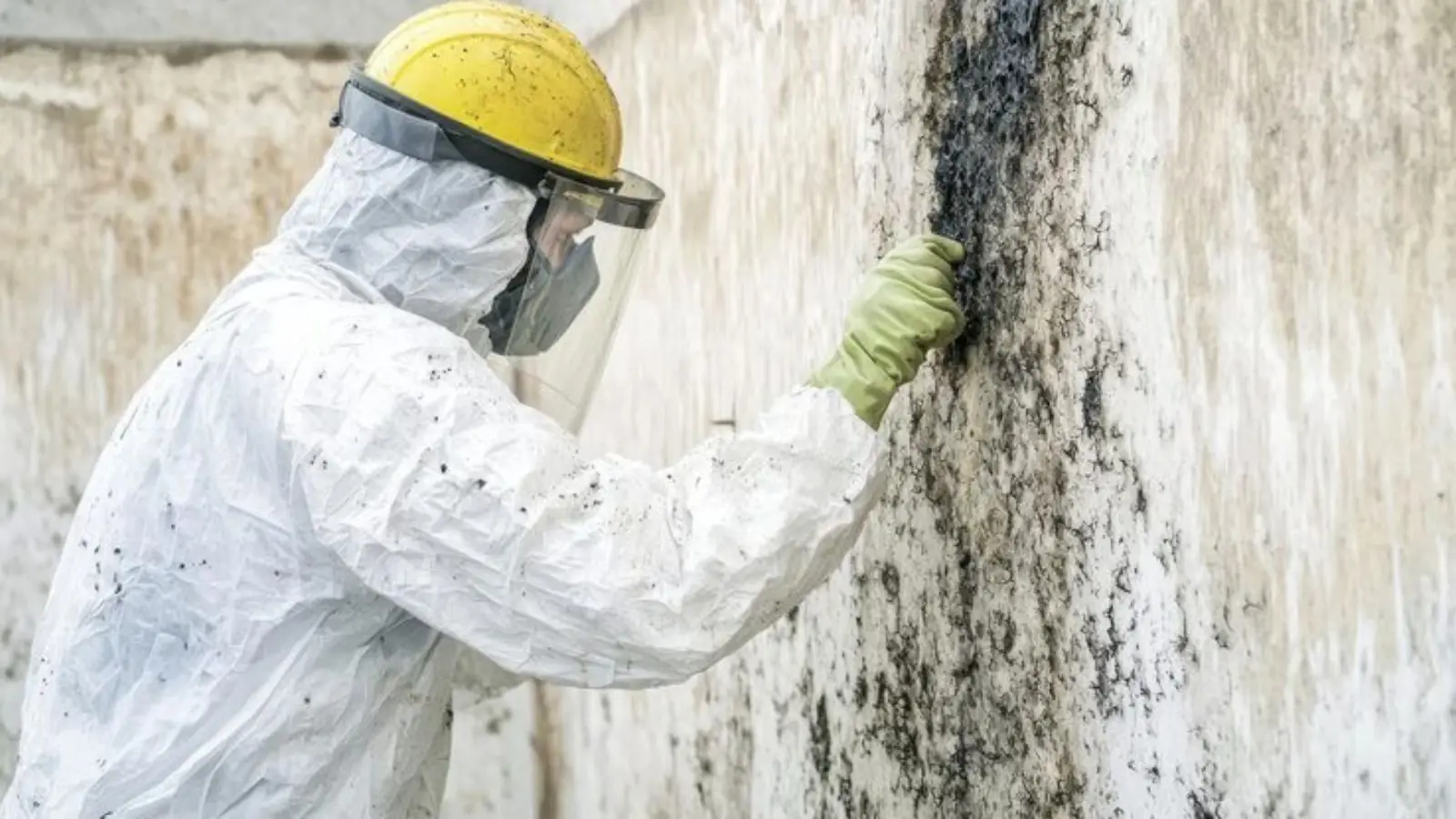
What mold remediation involves
Mold remediation in La Verne, CA means isolating the affected area, removing or cleaning contaminated materials, and correcting the moisture problem so growth has nothing to feed on. It is a controlled process, not a spray-and-wipe job.
Mold needs moisture, a food source such as drywall paper, wood or dust, and time. Take away the moisture and growth stops, but dormant spores stay behind, which is why the wet source has to be found first.
Crews work to published industry practice. ANSI/IICRC S520 is the standard for professional mold remediation, and you can ask any company you consider whether its crews follow it.
Why does my house smell musty and I see dark spots on the wall?
A musty smell and dark or fuzzy spots usually point to a damp area: a slow plumbing leak, a roof leak, a window that sweats, or a bathroom that never fully dries. Spots can be a surface film that wipes off, or the visible part of growth inside the wall.
The trade term for finding that moisture, containing the area and removing the growth is mold remediation. A moisture meter and a thermal camera tell a crew where water is, and that decides how big the job is.
Signs that point to a mold problem
None of these proves mold by itself. Together they tell you it is worth having the area looked at.
Common signs
- A musty or earthy smell that is stronger in one room or closet
- Dark, green, white or fuzzy spots on drywall, trim, grout or the underside of cabinets
- Paint or wallpaper that bubbles, peels or stains in a repeating pattern
- A past leak, flood or roof problem that was never fully dried
- Condensation that regularly beads on windows, pipes or an exhaust fan
- Warped baseboards or soft drywall near a bathroom, kitchen or water heater
Mold removal and black mold
Removal starts with containment. Crews seal the work area with plastic sheeting, run negative air machines with HEPA filtration so air flows into the area instead of out of it, and wear protective gear. Mold on porous material like drywall, carpet and insulation is normally cut out, bagged and removed. Hard surfaces such as framing can often be cleaned with HEPA vacuuming and damp wiping, and wood may be sanded or cleaned back to sound material.
Black mold gets a lot of attention online. Color alone does not tell anyone what species is growing, and many molds look dark. Only lab analysis identifies a species, and the removal method is largely the same regardless: contain, remove, clean and fix the moisture.
Any health question about exposure belongs with your physician. Our job is the building.
Mold after water damage
Mold can begin on wet materials within a few days when moisture and food are both present. That is why fast extraction and drying matter so much after a leak, flood or overflow.
If water damage went unaddressed, growth can already be present behind baseboards, under flooring or inside walls. The right order is stop and dry first, then remove damaged material, then clean. Drying equipment on a mold job without containment can blow spores around the house, so crews contain first.
The drying side is explained on our water mitigation page. Cleanup of debris and contaminated materials is covered under water damage cleanup.
Fix the leak first
Remediation without a moisture fix is wasted money. If a pipe is still dripping or a roof is still leaking, growth will return to the same spot no matter how well it was cleaned.
Look at the likely sources: supply lines and drain traps under sinks, shower pans and tile grout, water heater connections, roof flashing, window frames and an air conditioning drain line. A plumber or roofer fixes the source. Ask for the repair to be done and documented before rebuilding.
If the leak is on the supply side of your meter, call city utilities customer service. For leaks inside the home, shut the main valve at the house.
Do not scrub or disturb large areas
Sanding, scrubbing or blowing air at suspected mold can spread spores into other rooms. If the area is larger than a small patch, or you suspect a hidden leak, leave it alone, shut off the water if a pipe is the source, and call. If a long-term leak is involved, talk to your insurance adjuster before cleaning suspected mold, as California's Department of Insurance advises.
Mold testing, inspection and independent clearance
Inspection comes first. A visual check plus moisture meter and thermal camera readings show where growth and moisture are. Testing is optional and is mainly used to answer a specific question, such as whether growth is hidden or whether a cleaned area is ready to rebuild.
Air and surface samples are taken by an independent assessor and analyzed by a lab. Results show what was found in that sample on that day, and they are only as useful as the question asked. A single air sample does not describe a whole house.
Independent clearance testing happens after remediation. An assessor who is not the remediation company checks that the area is visibly clean, dry and free of dust, and may take samples. Independence matters because the person verifying should not be the person who did the work.
Call the 24/7 line and describe what you see and where. We will explain the next step, and a crew can be sent the same day depending on conditions.
Remediation approaches compared
Scope depends on what the moisture readings and inspection show. This table gives a general sense of how approaches differ.
| Situation | Typical approach | Honest trade-off |
|---|---|---|
| Small surface growth on hard material | Clean with HEPA vacuum and damp wiping, fix moisture | Fast, but only works if the source is dry |
| Growth on drywall or insulation | Contain, remove and replace material, clean framing | More disruption, more reliable than surface cleaning |
| Hidden growth in a wall cavity | Open the wall, contain, remove, dry, inspect | Opening walls costs more but finds the real extent |
| Large or repeated growth | Full containment, negative air, removal, clearance | Highest cost, and the moisture cause must be fixed |
No approach is a guarantee. If moisture returns, growth can return.
What affects the cost of mold remediation
Mold jobs vary widely, so no one can name a total without seeing the area. These factors move the scope.
| Factor | What changes it |
|---|---|
| Water category | Contaminated water behind the growth adds cleaning and disposal |
| Affected area | Square footage and how many rooms or wall cavities are involved |
| Materials | Drywall and insulation are removed, framing and masonry can often be cleaned |
| Drying days and equipment | Containment, negative air machines and dehumidifiers, and how long they run |
| Rebuild scope | Replacing drywall, paint and flooring after clearance, priced separately |
| Testing and clearance | Inspection, sampling and independent assessor fees are separate from removal |
Call for your own scope and a clear explanation of the price.
Insurance and what remediation cannot do
Sudden and accidental water damage is often covered, and mold that follows may be handled under the same claim depending on your policy. Long-term leaks and neglect often are not covered. Check your policy and ask your insurer.
Report the loss promptly, photograph the area before work starts, keep receipts and a log of calls, and get written line-item bids. Check any contractor's licence on the CSLB website.
Remediation cannot make a home mold-proof. If moisture returns, growth can return. What it can do is remove the growth you have, correct the cause and document the result.
Serving La Verne and nearby towns
We run a dispatch line that sends licensed and insured restoration professionals to La Verne homes. Crews carry moisture meters, thermal cameras, HEPA air scrubbers, negative air machines and drying equipment.
If mold followed a storm or ground water, see flood damage restoration. Crews also work in Glendora and San Dimas, and the service area page lists the rest.
Mold remediation questions in La Verne
A damp spot is the most likely cause, such as a slow leak, a roof leak or poor ventilation. Spots can be surface film or growth inside the wall. A moisture meter and thermal camera help find the source before anything is removed.
Color does not identify a species, and many molds look dark. Only lab analysis does that. The removal approach is largely the same: contain, remove, clean and fix moisture. Ask your physician about any health concerns.
Not always. Testing answers a specific question, such as whether growth is hidden. Visible growth with a known moisture cause often goes straight to remediation. An independent assessor can advise on whether sampling would help.
After remediation, an assessor who did not do the work checks the area and may take samples to confirm it is clean and dry. Independence keeps the check honest. Results describe the area on that day.
Clearance reports are often requested for home sales or loans, but we cannot promise any buyer or lender will accept one. Ask the buyer, agent or lender what they require before you order testing.
A small patch on a hard surface may be cleaned by the homeowner, but bleach does not fix the moisture and does not penetrate porous material. Larger or hidden growth needs containment so spores are not spread.
It depends on your policy and the cause. Mold after sudden and accidental water damage may be handled with that claim, while long-term leaks often are not covered. If a long-term leak is suspected, talk to your adjuster before cleaning.
ANSI/IICRC S520 is the published standard for professional mold remediation. It is a good thing to ask any company about, including us. It guides containment, removal, cleaning and verification.