

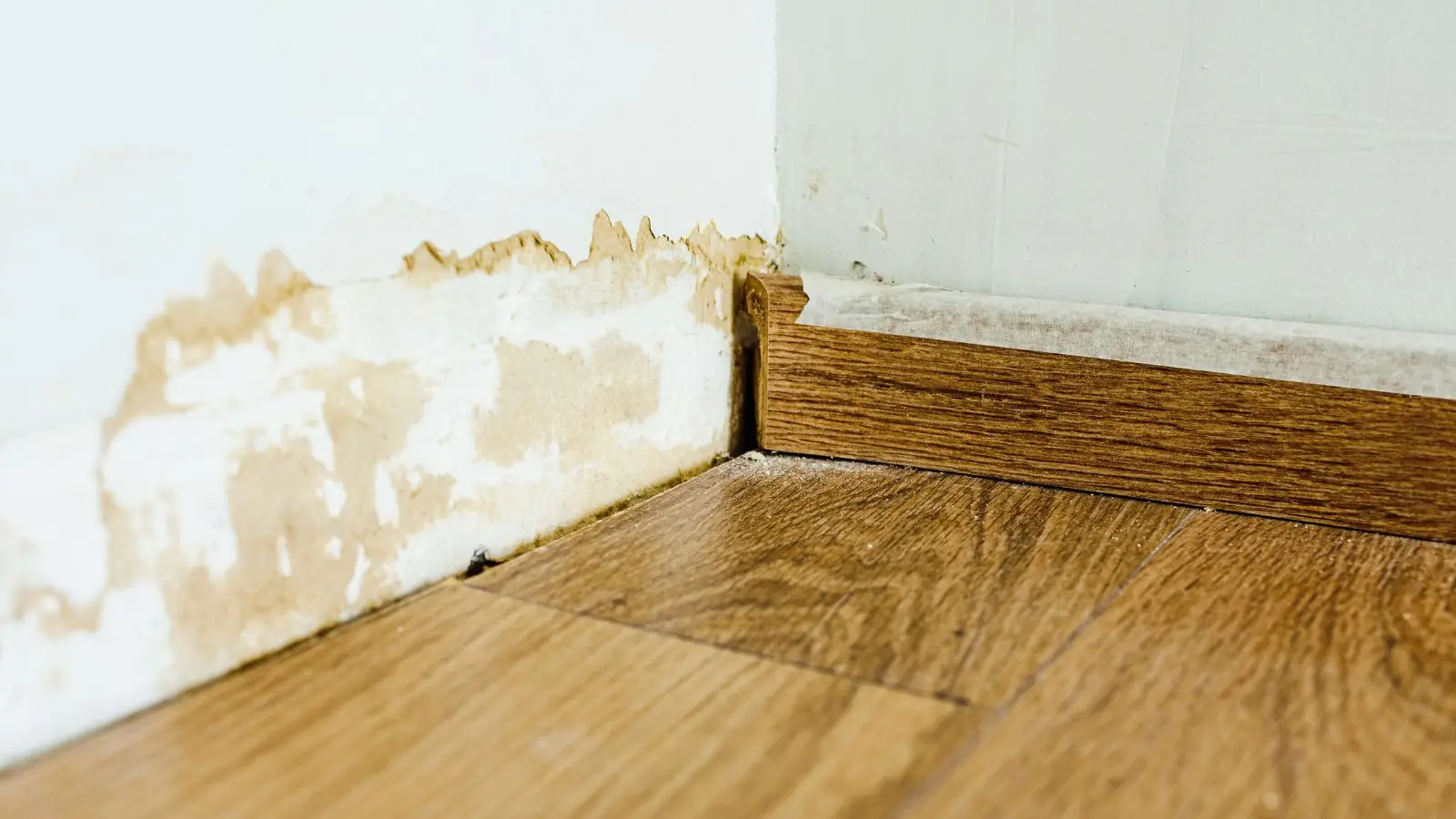
Can this wall be saved?
Water damage wall repair in La Verne, CA comes down to one question: is the drywall still firm and clean, or has it softened? Firm, flat, clean-water drywall that was wet for a short time can sometimes be dried in place. Soft, crumbling, bulging or stained-through drywall should be cut out.
Press a thumb against the wall near the damage. If it dents, flakes or feels like wet cardboard, plan on replacement. If it stays hard but looks stained, take a moisture reading before you decide anything.
If a contractor says the crew follows ANSI/IICRC S500, ask what that means for how they dry and test the wall before closing it.
Patch, panel or full wall: a quick decision guide
Use this as a first sort. A moisture meter has the final word, and sewage or flood water changes the answer to replace regardless of how the wall looks.
| What you see | Likely path | Why |
|---|---|---|
| Small stain, wall firm, source fixed days ago | Dry in place, prime and paint | Paper face and gypsum are still intact |
| Bubbled paint, soft spot the size of a hand | Cut a patch, replace that piece | Damage is local, framing usually fine |
| Bulge or sag across a full sheet | Remove the full panel | Gypsum has lost strength, mold risk rises |
| Wet at the bottom of the wall, wicking upward | Remove a flood cut a foot or two above the wet line, check insulation | Water climbs drywall by capillary action |
| Any contact with sewage or dirty water | Remove affected drywall and insulation | Contaminated porous material is not cleaned in place |
Water that wicks upward can leave drywall wet well above the visible line, so measure past the stain.
How a clean patch is cut and closed
- 1
Stop the source and dry
Fix the leak first. Run fans and a dehumidifier, then confirm the cavity reads dry against an unaffected wall before cutting anything out.
- 2
Cut back to solid ground
Mark a clean rectangle that reaches the center of a stud on each side. Score with a utility knife, remove the damaged piece and check the insulation behind it.
- 3
Fit and tape
Screw a matching-thickness piece to the studs, embed paper or mesh tape, and apply thin coats of joint compound, sanding between coats.
- 4
Prime, texture, paint
Use a stain-blocking primer, match the texture, then paint the whole wall corner to corner so the sheen reads evenly.
What is behind the wall matters more than the wall
Drywall is the cheap part. Insulation, wiring, framing and the plumbing that caused the leak are what turn a patch into a project. Wet fiberglass batts slump and hold water against studs, so they are usually removed. Wood framing is usually dried in place and checked with a meter.
If you cut open a wall and see dark staining, fuzzy growth or a musty smell, stop. Mold needs moisture and something to grow on, and cleaning it casually can spread spores. Health questions about mold belong with a physician. For the removal itself, read about mold remediation before you scrub.
California's Department of Insurance also advises that if long-term leakage is suspected, you should talk to the adjuster before cleaning suspected mold.
Stop before you cut
Do not cut into a wall that may hold live wiring until you know the circuit is off at the panel, and only if you can reach the panel without standing in water. If water is near outlets or the panel, stay out and call the utility or 911 for any electrical or gas risk before anything else.
Call the 24/7 line. We send licensed and insured crews who map moisture before they open anything.
Handle it yourself or call a crew
A small patch from a clean, one-time leak is a reasonable weekend project if you have drywall experience. Plan on drying time, three coats of compound with sanding, primer and paint across several days.
Call a crew when the wet area is larger than a few square feet, when more than one room is involved, when the water was not clean, or when you cannot find the source. At that point the work is drying and moisture mapping first, which is covered under water mitigation, and rebuilding second.
Remember California's license rule: a contractor license is required when labor and materials total $1,000 or more, or when a permit is needed. Verify any contractor on the CSLB website.
La Verne homes, owners and the paper trail
Census QuickFacts lists the owner-occupied housing rate in La Verne at 69.2% and the median owner-occupied home value at $817,000 (2020 to 2024). A house at that value is worth repairing carefully, with the work documented.
Practically, that means photographing the wall before and after the cut, keeping receipts for materials and drying equipment, and asking your insurer before extensive permanent repair. Written, line-item bids from licensed contractors make it easier to compare a patch to a larger scope.
For questions about permits on a wall rebuild, ask your city building department. City Hall is at 3660 D Street, La Verne, and its main line is (909) 596-8726.
Source: U.S. Census Bureau QuickFacts for La Verne city, California, plus California Department of Insurance residential claims guidance and City of La Verne website.
Sharing a wall with the neighbors' problem
Water that starts next door can show up on your side of a shared wall in a townhome or condo. If you suspect that, notify your association or landlord and your insurer, then document it.
If your home is near the edge of town, you may also be served by crews listed on our Pomona page or Covina page. Check the ZIP codes on each page, and see water damage repair for how rebuild work is scoped.
Wall repair questions from La Verne homeowners
Replace it if it is soft, crumbling, bulging or stained through. Firm drywall with a surface stain may dry in place if the readings come down. A moisture meter gives a clearer answer than looking.
The water may be traveling along a pipe or framing from somewhere else, or condensation may be forming inside the wall. A thermal camera and moisture meter can trace the pattern. Opening a small inspection hole is sometimes the only way to confirm.
Paint over a damp wall tends to bubble and peel, and the stain can return. Fix the source, dry the wall, prime with a stain blocker, then paint. If the stain bleeds through again, moisture is still present.
Often a foot or two above the visible wet line, since water wicks upward in drywall. Keep cutting until the meter reads normal. Insulation behind the cut should be inspected and usually replaced if wet.
Often a few days with air movers and a dehumidifier, depending on thickness, humidity and how wet the cavity got. Patch when readings match an unaffected wall, not on a fixed schedule.
California requires a contractor license on jobs of $1,000 or more or those that need a permit. I cannot tell you what your project needs, so ask your city building department. City Hall is at 3660 D Street and the main line is (909) 596-8726.
Sudden and accidental water damage is often covered, and long-term leaks often are not. Check your policy and ask your insurer, and do not discard damaged materials before the adjuster has had a chance to look.