

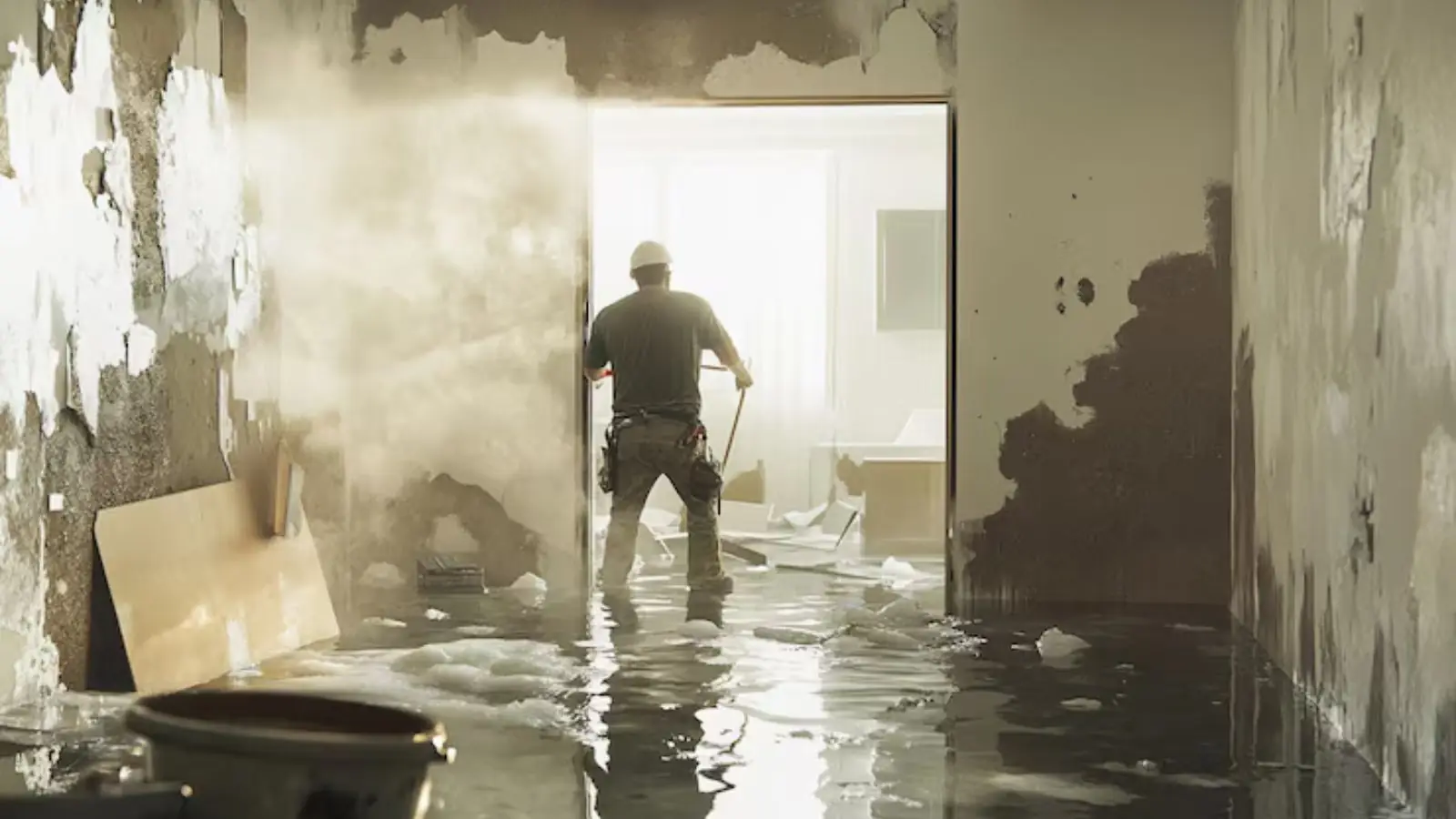
The short answer: dry, decide, rebuild
Repair from water damage in La Verne, CA follows one fixed order. Stop the water, dry the structure until moisture readings match unaffected materials, remove what cannot be saved, then rebuild and finish. Skipping or rushing the drying step is the most common reason a repair fails.
Most people want to start with the visible part: the stained ceiling, the buckled floor, the soft baseboard. That is the last part of the job. The first part happens inside walls and under flooring where you cannot see, and it is measured with a moisture meter, not by eye.
Four stages of a water damage repair
- 1
Stop and dry
The leak is fixed or isolated, standing water is extracted, and air movers and LGR dehumidifiers run until readings level off. This often takes a few days, depending on materials and conditions.
- 2
Confirm dry
Moisture meters and a thermal camera check drywall, framing and subfloor against a dry reference reading. Nothing gets closed up until the numbers agree.
- 3
Tear out what failed
Soaked insulation, swollen drywall, delaminated underlayment and any porous material that stayed wet too long come out in clean sections.
- 4
Rebuild and finish
New insulation, drywall, texture, primer, paint, trim and flooring go back in. Finish work shows the repair, so matching texture and sheen takes time.
Safety steps before you pick up a tool
Before you rebuild
- Make sure the leak is repaired and the supply line holds pressure with no weeping joints.
- Leave breakers off for circuits near the wet area until someone qualified clears them.
- Hold off on closing walls, laying new floor or painting until meter readings match the dry parts of the house.
- Protect your hands, eyes and lungs when you cut out soaked drywall or insulation, with gloves, goggles and a dust mask.
- Sewage or outdoor flood water means contamination, so stop and let a trained crew take over.
- Take photos and hold onto damaged pieces if an insurance claim is possible.
Why drying decides everything that follows
Wet drywall paper and framing hold water long after the surface feels dry to the touch. Close a wall over that moisture and you trap it against studs and sheathing, which is exactly what mold needs to get started. Mold also needs only moisture and something organic to feed on, so drywall paper and wood are both suitable.
Industry practice for water damage work is published as ANSI/IICRC S500, and you can ask any company whether its crews work to it. In practical terms it asks for documented moisture readings at the start, during drying and at the end. That paper trail is also useful if your insurer asks how you decided what to keep.
If you only need the water removed and the structure dried, that work is covered under water mitigation. This post is about what comes after, when the building is ready to be put back together.
What usually gets repaired, replaced or kept
The right call depends on the material and how long it stayed wet. These are typical outcomes, not promises, and a moisture reading on your own house beats any general rule.
| Material | Often repaired or dried in place | Often replaced |
|---|---|---|
| Drywall | Small, clean-water wet spots caught early and dried | Sagging, crumbling or soaked for days, or after sewage or dirty water |
| Insulation | Rarely salvaged once saturated | Most wet batts, since they hold water and slump |
| Baseboard and trim | Solid wood that dries flat | Pressed-fiber trim that swells and will not shrink back |
| Hardwood floor | Slightly cupped boards given time to dry slowly | Boards that are buckled, or planks that stayed wet under a finish |
| Carpet and pad | Clean-water carpet lifted quickly | The pad, nearly always, and any carpet after contaminated water |
| Cabinets | Solid-wood boxes that dry out | Particleboard bases that swell at the toe kick |
Water category matters too. Category 1 water from a supply line is the best case. Category 2 and 3 water usually means more removal.
Where homeowners get tripped up
The first trap is the contractor who quotes a paint job while the wall is still wet. The second is permanent repair before the insurer has seen the damage. California's Department of Insurance advises against extensive permanent repairs or throwing away damaged items until the adjuster has had a chance to inspect, so photograph everything first.
The third trap is unlicensed work. California requires a contractor license when the total for labor and materials reaches $1,000 or more, or when the job needs a permit. You can check any contractor's license on the CSLB website before signing.
Call the 24/7 line and describe what you see. We send licensed and insured crews, and they will explain the scope and cost factors for your house.
Document before anything is torn out
A tidy record protects you with the insurer and with the contractor. Start it the same day.
Claim file checklist
- Photos and short video of every wet area from several angles, before cleanup
- A written list of damaged belongings with rough age and value
- A log of every call and email with your insurer, with dates
- Receipts for emergency steps such as tarps, fans or a plumber's visit
- Written, line-item bids from licensed contractors, not a single lump sum
- Moisture readings or drying logs from the crew, if they provide them
What drives the cost of rebuilding
Repair cost is a sum of factors, not a flat rate, and anyone quoting a price without seeing the house is guessing. The biggest factors are how much area was wet, what the materials are, how long the water sat, and whether the water was clean or contaminated.
For the rebuild side specifically, see our water damage repair service, which covers drywall, flooring, paint and cabinets after drying is complete.
La Verne water, hard water and what repairs reveal
La Verne's city water utility reports that about 24% of supply comes from city wells and about 76% is purchased from Three Valleys Municipal Water District. The city's 2025 water quality report lists hardness for city groundwater at 351.7 ppm as calcium carbonate (reported range 290 to 450) and 97 ppm for the Three Valleys water.
Why that matters for repairs: hard water leaves crusty mineral deposits where it seeps over time. White crust at a pipe joint, a stained cabinet floor or a chalky line on a wall is a clue that a slow leak has been running a while. That tells the contractor to open and check beyond the stain, and tells your insurer the loss may not be sudden.
City utilities customer service is (909) 596-8744. No separate emergency water line is published, so shut your main valve first and call customer service for supply questions.
Source: City of La Verne, 2025 Water Quality Report (utility consumer confidence report), plus California Department of Insurance residential claims guidance.
Nearby homes, same repair sequence
The sequence does not change across town lines. Homes next door follow the same rules. Our San Dimas restoration page and Claremont page each list the ZIP codes served, so check yours before calling.
If your damage is still active, with water running or pooled, start with emergency water removal first. Repair planning comes after the structure is dry.
Repair questions La Verne homeowners ask
Repair can start once moisture readings show the framing and drywall are dry. That is often a few days after drying equipment is set, though thick materials and humid conditions can stretch it. The crew's readings tell you when, not the calendar.
Only after the source is fixed and the area reads dry. A stain-blocking primer helps, but painting over a damp wall hides a problem without solving it. If the stain returns, there is still moisture or a leak behind it.
Photograph first and ask your adjuster. California's Department of Insurance advises against extensive permanent repairs or discarding damaged items before the adjuster has a chance to inspect. Emergency steps to stop further damage are expected, and you should keep receipts.
California requires a license when labor and materials together reach $1,000 or more, or when the work needs a permit. Smaller jobs may fall under that threshold. You can verify any license on the CSLB website.
Sudden and accidental water damage is often covered, while long-term leaks and neglect often are not, and flood damage usually needs separate flood coverage. Check your policy and ask your insurer, since wording varies.
La Verne's city groundwater tested at 351.7 ppm hardness in the 2025 report, so slow leaks tend to leave mineral deposits as the water evaporates. Crust near a stain suggests the leak has been going on for a while, which is worth telling your contractor.
Hidden damage found later can usually be reported, but tell your insurer right away. Keep photos of what was uncovered and stop work in that area until you hear back.