

Short answer: stop the water, then contain, then remove
If dark growth appeared on a ceiling after a roof leak or an upstairs plumbing leak, the safe order is to stop the water, keep the room closed off, document the damage, and have the wet drywall assessed before anyone scrubs. Removal of growth-covered drywall is normally done by cutting out the affected section, not by cleaning it.
This is different from a small condensation spot on a bathroom ceiling. A leak wets the drywall, the insulation above it and the framing, so the surface growth is only the visible edge of a wet assembly. A soft or sagging ceiling should be treated as an urgent water problem first.
Why a leak ceiling behaves differently
Drywall is paper-faced gypsum. When water soaks through from above, the paper stays wet for as long as insulation or framing keeps feeding it, and that is exactly the condition mold needs. A ceiling that dried on its face can still hold moisture in the cavity.
Where the water came from also matters. A roof leak usually means clean rainwater passing through attic materials, while a supply line leak is clean at first but can pick up dust and insulation debris. A drain or sewage leak is a different category entirely and calls for a sewage and contaminated-water response before any mold question comes up.
What the first 48 hours should look like
- 1
Stop the source
Shut the main water valve for a plumbing leak, or place a tarp or call a roofer for a roof leak. Catch drips with containers and move belongings out of the room.
- 2
Close the room
Shut the door, tape plastic over the vents if you can, and turn off the room's HVAC supply. This keeps loose spores from traveling through the house.
- 3
Photograph before touching
Take dated photos and video of the stain, the damaged items and the source. California's Department of Insurance advises doing this before extensive repairs or discarding damaged items.
- 4
Call for assessment
A crew checks the cavity with moisture meters and a thermal camera, maps the wet area, and explains what to dry and what to remove.
Why scrubbing a growth-covered ceiling makes things worse
Mold spreads by releasing spores, and brushing, scraping or spraying a dry, growth-covered surface knocks them loose. Overhead work is the worst case, because the debris falls on you and the floor, and fine particles drift through the room and into the air handler.
Wiping the face also does not solve the cavity. Growth often continues on the back of the drywall and on attic-side insulation. That is why California's insurance guidance recommends talking with the adjuster before cleaning suspected mold when long-term leakage is a possibility.
Cleaning versus remediation for a leak ceiling
The right method depends on the material and how long it stayed wet.
| Situation | Typical approach | Reason |
|---|---|---|
| Ceiling dry, a few small spots, no staining ring | Detergent wipe, dry, monitor | Surface growth only, and the cause is fixed |
| Ring stain, ceiling firm, leak stopped recently | Moisture mapping, drying, then decide on removal | Cavity may still be damp |
| Ceiling soft, bulging or sagging, growth visible | Containment, then cut out and bag affected drywall | Wet drywall will not recover, and removal limits disturbance |
| Growth across insulation or framing in the attic | Remediation with HEPA filtration and material removal | The growth is in structural materials as well as drywall |
| Leak from drain or sewage line | Contaminated water response first | Category 3 water is a different job |
A crew explains the specific plan after a site visit. This table describes common practice, not a promise for any one ceiling.
Call the 24/7 line. We send a crew with moisture meters and a thermal camera, and they explain the plan for containment, drying and removal before the work starts.
What containment actually means
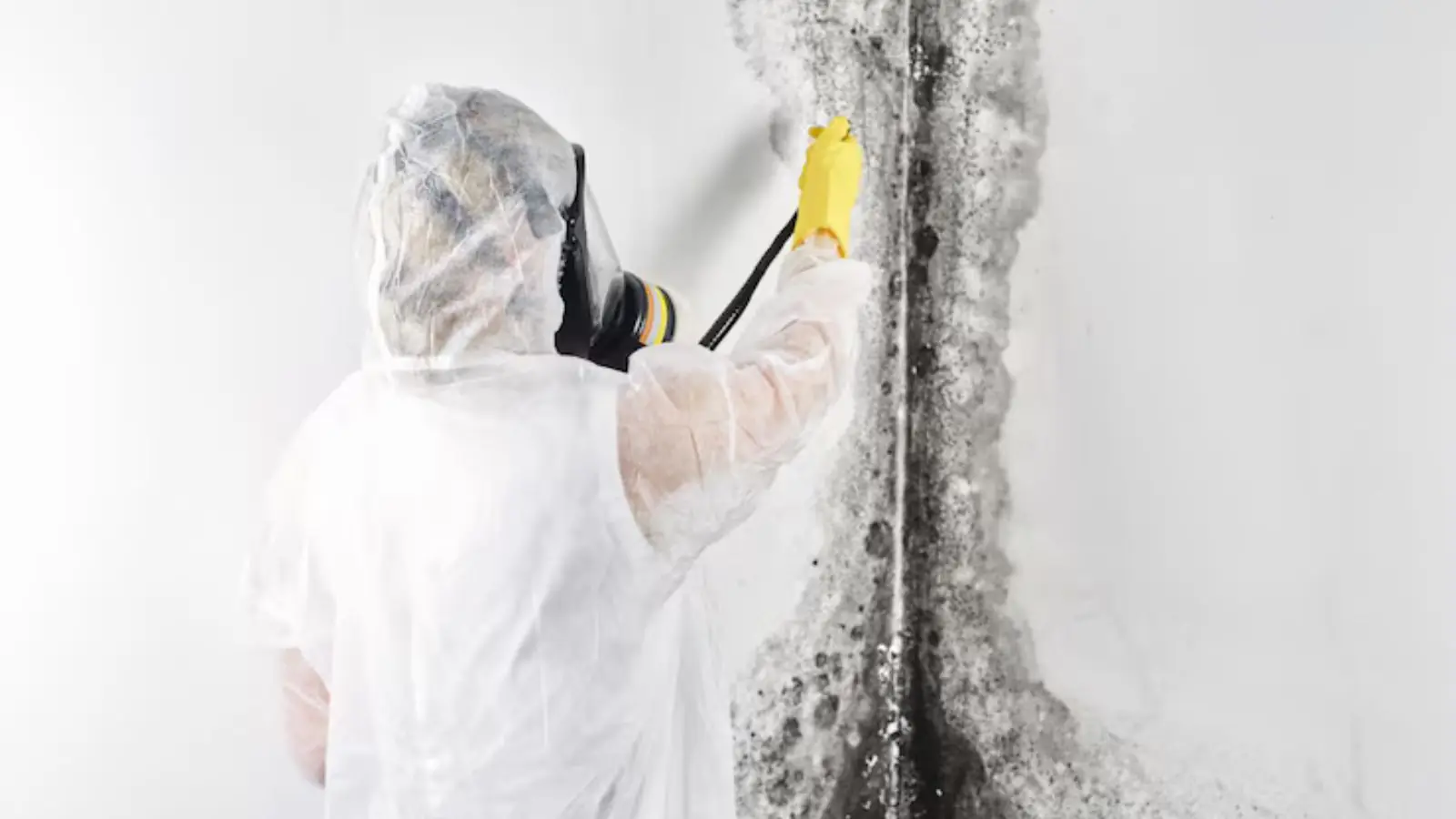
Containment is a controlled work area. The crew hangs plastic sheeting to seal the room, runs a negative air machine with HEPA filtration so air flows into the work area instead of out of it, and often uses a small decontamination chamber at the door. Floors are covered, and the HVAC supply is closed off.
Affected drywall is misted lightly or cut in pieces, bagged inside the work area, and carried out sealed. Then the area is HEPA vacuumed and wiped, and the structure is dried with air movers and dehumidifiers. These practices follow the published ANSI/IICRC S520 standard, and you can ask any company whether its crews work to it.
Is remediation the right call or is it overkill?
Choose remediation when the ceiling is soft, the patch is larger than a few square feet, growth reaches the attic side, or the leak lasted days or longer. Choose a plain cleaning when the spot is tiny, the drywall is firm and dry, and the cause is fixed.
If you are unsure, get an assessment before anything is cut or scrubbed. Cost drivers include the size of the area, the number of rooms, how wet the cavity is, whether insulation must be replaced, and how much rebuilding follows. After removal, water damage repair puts in new drywall, texture and paint.
Ask whether California licenses mold work before you hire, and check any contractor's license on the state license board website. For nearby calls, our crews also cover Covina and Pomona.
If the leak starts at the water supply in La Verne
La Verne water comes from the city utility, which the 2025 water quality report says is about 24% local groundwater and about 76% purchased from Three Valleys Municipal Water District. The city does not publish a dedicated water emergency line, but it does list a customer service number for supply questions.
For a leak inside your house, shut the main valve at the home first. That stops the water faster than any phone call. Then call city utilities customer service if you suspect the problem is on the supply side or want to check your account.
Source: City of La Verne 2025 Water Quality Report and city contact listings.
Questions about black mold on ceilings
A small dry spot with firm paint can be cleaned. After a leak, with soft drywall or a large patch, it is better to have a crew cut out and bag the affected section under containment. Do-it-yourself scrubbing spreads spores.
There is no exact clock, and it depends on temperature, materials and airflow. Growth can start within days if materials stay wet. Fast drying is the best way to limit it, which is why the first 24 to 72 hours matter.
It depends on how long it was wet and what is on it. Drywall that is soft, sagging or covered in growth is normally removed. Firm drywall with no growth can sometimes be dried in place and checked with a moisture meter.
It depends on your policy and the cause. Sudden and accidental water damage is often covered, long-term leaks often are not. Report the loss promptly, keep photos and receipts, and ask your insurer about mold coverage before cleaning.
Shut your own main valve first, then call city utilities customer service, since the city has no published water emergency line. After that, call us to dry and assess the damage inside the house.
No. Such paint does nothing for wet drywall or a continuing leak. Once the cause is fixed and materials are dry, it may help on bathroom surfaces, but it is not a substitute for removing damaged material.