

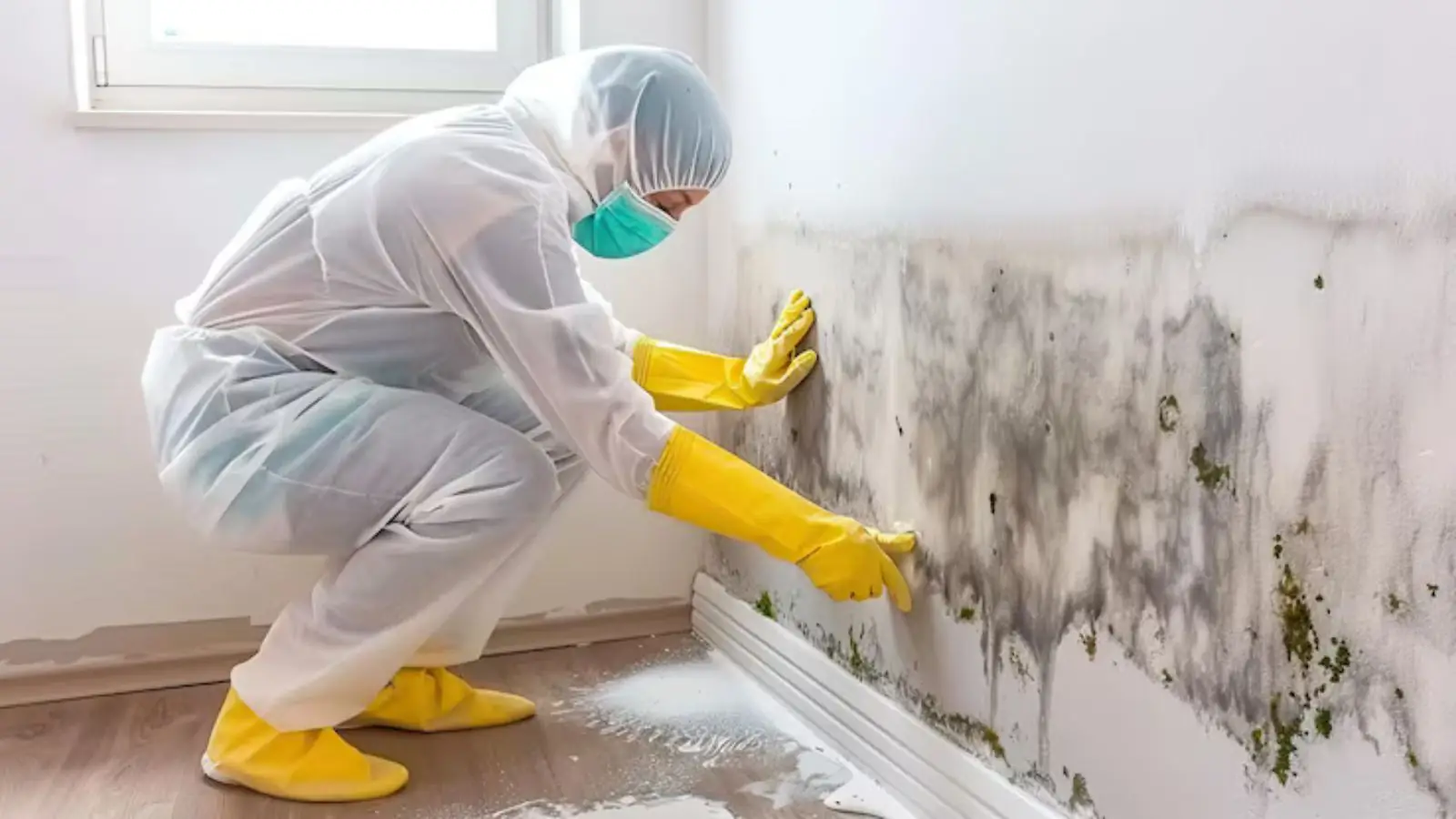
Start with the material, not the color
Hard, nonporous surfaces such as glazed tile, glass, metal and sealed fixtures can usually be cleaned and kept. Porous surfaces such as drywall, ceiling tile, carpet pad, insulation and upholstered furniture absorb moisture and growth, so they are harder to clean and are often replaced once growth is established.
That one rule drives most decisions. Add two more: mold needs moisture, so drying comes before and after any cleaning, and a patch bigger than a few square feet or one that appeared after a leak should be assessed before you touch it. Questions about how mold affects a person belong with a physician.
Surface guide: clean, dry or replace
Use this as a first sort. A crew can confirm with a moisture meter.
| Surface | Usual approach | Replace when |
|---|---|---|
| Glazed tile | Detergent and a soft brush, rinse, dry | Almost never, but check the backing if tile is loose |
| Grout | Stiff brush with detergent, dry, consider sealing | Grout is crumbling or the wall behind is soft |
| Painted drywall, small and dry | Damp detergent wipe, dry thoroughly, then repaint | Soft, bubbled, stained in rings or visibly growing |
| Painted drywall, large or after a leak | Assessment and likely removal under containment | Usually replaced once growth is established |
| Sealed wood trim and furniture | Detergent wipe, dry, light sanding if surface only | Wood is soft, split or growth is deep in the grain |
| Unfinished framing lumber | Assessed by a crew, may be cleaned or sanded | Rot or structural softness |
| Washable fabric | Launder as the label allows, dry fully | Odor remains after washing |
| Carpet, pad, upholstery | Dry fast if recently wet and clean | Wet longer than a couple of days or growth is visible |
These are common practice for small, recently wet materials. They are not a diagnosis or a promise for your home.
Tile, grout and glass
Hard surfaces are the easy case. Scrub with dish detergent or a tile cleaner, rinse with clean water, and dry with a towel instead of letting the surface air-dry. Grout is porous, so it holds growth longer than the tile around it, and an old toothbrush or a stiff nylon brush gets into the lines.
If grout keeps darkening in weeks, the problem is usually dampness, not cleaning. Fix the ventilation, the caulk or a slow leak behind the tile. Never mix bleach with ammonia or acidic cleaners, because the fumes can be unsafe.
Painted drywall and wood
Painted drywall
A small dry spot with firm paint can be wiped with a barely damp cloth and detergent. Do not scrub hard or spray, and dry the area right away. If the wall is soft, stained in rings or dark patches keep coming back, the drywall is wet inside and should be assessed.
Wood
Finished wood trim cleans like tile if it is firm. Raw framing and subfloor are different, because mold can sit in the grain, and rot may be present. A crew can sand or clean some structural wood, and decide on replacement if it is soft.
Drywall and wood often tell different stories. Drywall fails faster, while wood can survive a lot more drying. A moisture meter helps you decide which one you actually have.
Call the 24/7 line. We send a crew with moisture meters and a thermal camera to check whether the materials can be dried or need to come out.
Fabric, carpet and soft goods
Washable clothes, curtains and bedding can usually be laundered and dried completely. Dry-clean-only items need a cleaner that handles water-damaged goods. Upholstered furniture and mattresses with visible growth are often not worth saving.
Carpet that stayed wet more than a day or two, or carpet pad of any age with growth, generally goes. Take photos and a list before discarding anything covered by a claim, since California's Department of Insurance advises waiting for the adjuster to inspect where possible.
What to throw away
Bag these items before carrying them through the house, and keep photos for your insurer.
Usually discard
- Ceiling tiles and insulation with visible growth
- Wet or growth-covered drywall, cut out in sections
- Carpet pad and carpet that stayed wet for several days
- Mattresses, cushions and stuffed items with growth
- Paper, cardboard and books that stayed damp
- Porous items with a lingering musty smell after washing
Doing the cleaning safely
Wear rubber gloves, safety glasses and an N95-style mask. Open a window or run a fan to the outside, and keep pets and kids out of the room. Use detergent and water, not sprays that mist the air, and bag debris before moving it.
If you plan to hire help, ask whether the company follows the published ANSI/IICRC S520 standard, ask whether California licenses mold work, and check the contractor's license on the state license board website. After a leak, water damage cleanup and drying may be needed before any mold work makes sense. Nearby, we also send crews to Glendora and Covina.
What costs more and why
Price depends on how many rooms are involved, how wet the materials are, whether drywall or flooring must be removed, whether containment and air filtration are needed, and how much rebuilding follows. Call us for a scope and a price explanation for your own situation.
Sudden and accidental water damage is often covered by insurance, while long-term leaks and neglect often are not. Check your policy and ask your insurer before discarding items.
Older wood in La Verne buildings
The La Verne Heritage Foundation runs Heritage Park, home to the Weber House, which was built in 1885 and moved to the park in 1979. Preserving an old wood building depends on controlling moisture, since damp wood is where growth and rot begin.
The tie-back for your house is simple: if you have older wood trim, floors or framing in La Verne, keep gutters, irrigation and plumbing from wetting it. For an older home, check any repair against your city building department about permits.
Source: La Verne Heritage Foundation and the Historical Marker Database entry for the Weber House.
Mold and mildew removal questions
Mildew is a casual term for mold growing on a surface, usually flat and powdery. The word does not describe a different species. The same moisture control and cleaning rules apply.
Small, dry, firm spots can sometimes be cleaned and repainted. If the wall is soft, stained or keeps returning, the drywall is usually cut out. A moisture meter tells you which case you have.
Bleach works on hard surfaces but does not reach inside porous materials, and it adds water. Detergent and water is the usual first step. Never mix bleach with other cleaners.
Take dated photos and video, keep a list of damaged items and receipts, and log your calls. Sudden and accidental damage is often covered, but check your policy. Ask the adjuster before throwing away large items.
Often yes, if it is structurally sound. Methods include HEPA vacuuming, wire brushing or sanding, and drying. Soft or rotted framing needs replacement, which a crew can assess.
Only the general point that old wood lasts when it stays dry. The Weber House dates to 1885. For your home, keep irrigation off walls, fix leaks fast, and ask the city building department whether a repair needs a permit.