

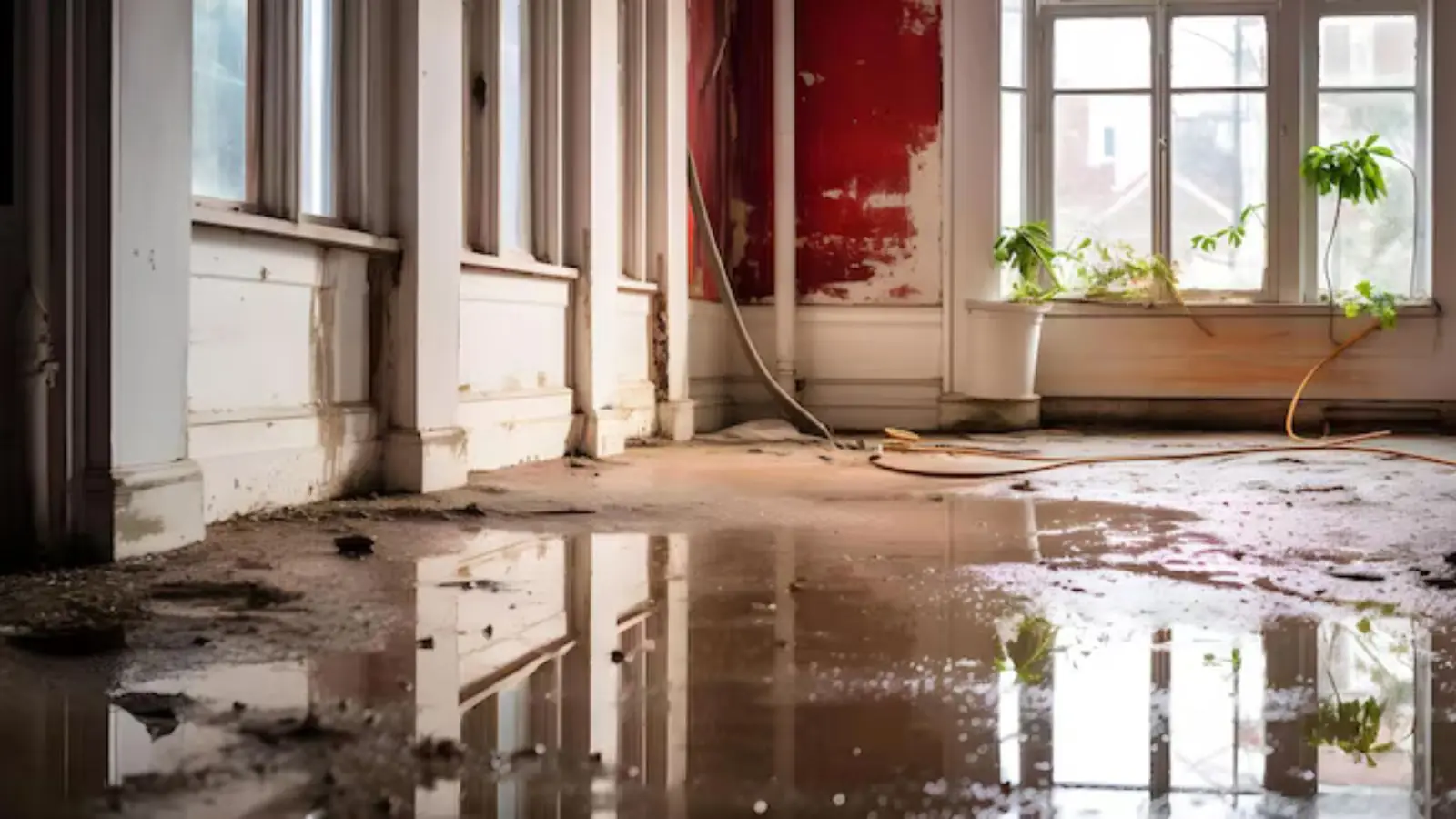
Start with safety, not with the mop
After water enters a home, the first priority is the people and pets in it. Floodwater from outside, a sewer line or a storm drain is usually treated as Category 3, which means it may carry contamination. Plan as if every wet surface needs careful handling.
The steps below apply to ground-floor rooms, garages, crawl spaces and any below-grade space. Many Southern California homes sit on slabs or raised foundations, so if your home has no basement, ignore the parts that do not fit. If it does have a low area, the advice applies there.
Electrical and gas risk comes first
Do not walk into standing water if outlets, cords, appliances or the panel could be energized. Stay out and call the utility or 911 for any electrical or gas risk before calling anyone else. Never touch the panel with wet hands or while standing in water.
Keep children and pets away from the water. Wear waterproof boots and gloves when you do enter a safe, dry-footed area.
Cleanup in the order that works
- 1
Stop more water coming in
Close the main valve if the source is inside. If water is coming from outside, move belongings up and out of its path. Photograph the waterline before anything changes.
- 2
Remove standing water
Extraction units and pumps pull water faster than buckets and wet vacs. For deep or contaminated water, a crew with proper equipment and protective gear is the safer route.
- 3
Sort what stays and what goes
Hard, nonporous items can often be cleaned and disinfected. Porous items soaked in contaminated water usually cannot be made safe. The sorting table below shows the usual calls.
- 4
Dry the structure completely
Moisture meters and thermal cameras show where water is hiding. Air movers and LGR dehumidifiers then dry floors, walls and cavities, which often takes a few days depending on materials and conditions.
Standing water: what you can and cannot do yourself
Shallow clean water from a supply line can be handled with towels and a wet vac if the power is off in that area. Deeper water, water that smells of sewage or looks gray or brown, or water that reached insulation and wall cavities, calls for a crew. A flood damage restoration team brings extraction units, containment and protective gear.
Do not run household fans through contaminated rooms, because they push droplets and dust around the house. Do not mix cleaning chemicals, especially bleach with ammonia products. Leave heavy sewage to professionals.
What to throw away and what to keep
These are usual calls after contaminated floodwater. Your insurer may want to see items before disposal, so photograph first.
| Item | After contaminated water | Notes |
|---|---|---|
| Carpet and pad | Usually discard | Pad holds contamination and rarely cleans |
| Drywall and insulation that wicked water | Usually discard the wet portion | Crews cut above the wicking line and dry the cavity |
| Upholstered furniture and mattresses | Usually discard | Fabric and foam absorb contaminated water |
| Solid wood furniture | Often cleanable | Dry slowly and watch for warping |
| Glass, metal and hard plastic | Often cleanable | Wash and disinfect |
| Food and medicine touched by the water | Discard | Do not keep items that touched floodwater |
| Papers, photos and keepsakes | Case by case | Freezing documents buys time for specialists |
California's Department of Insurance advises not discarding damaged items before the adjuster has had a chance to inspect, and to photograph and list them. Keep samples or photos of anything you must remove for safety.
Our 24/7 dispatch line sends a licensed and insured crew with extraction and drying equipment. Call, and we will talk through what to do while you wait.
Drying and what comes after
Drying is the part owners underestimate. Surfaces that feel dry can still hold moisture in the subfloor, framing and wall cavities. Crews log moisture readings over several visits and stop only when materials return to normal levels.
Industry practice follows ANSI/IICRC S500 for water damage, and you can ask any company whether its crews work to it. Once the structure is dry, water damage cleanup covers sanitizing and deodorizing, and rebuilding is a separate phase.
We send crews across the foothill communities, including Glendora and Covina, so the same cleanup sequence applies there.
Flood coverage and sudden water coverage are different
This is the most misunderstood point after a storm. Sudden and accidental water damage, such as a burst pipe, is often covered by a homeowners policy. Flood damage is usually excluded, and California's Department of Insurance states that standard homeowners policies do not cover flood. Flood needs its own coverage.
So the cause of the water decides the claim. Rising ground water, overland flow and storm runoff are flood. A failed supply line or appliance is generally not. Ask your insurer which category your loss falls in, and what your policy says about sewer backup.
Flood versus sudden water at a glance
| Question | Flood | Sudden pipe or appliance failure |
|---|---|---|
| Usual cause | Storm runoff, rising groundwater, overland flow | Burst pipe, failed hose, water heater |
| Standard homeowners policy | Usually excluded | Often covered if sudden and accidental |
| Separate policy needed | Yes, flood coverage | No, but check exclusions |
| Typical water category | Often Category 2 or 3 | Often Category 1 at first |
| First call after safety | Utility or 911 if electrical risk, then restoration crew and insurer | Shut the valve, then crew and insurer |
Paperwork to build while cleanup starts
Documentation list
- Photos and video of the waterline, every room and every damaged item
- A written list of damaged belongings with age and value
- Receipts for pumps, supplies, storage and temporary housing
- A log of calls and copies of all correspondence with your insurer
- Written, line-item bids from licensed contractors
- The date you reported the loss and any claim number you were given
Flood questions specific to La Verne
Flood zones and drainage differ by address, so do not assume your property is in or out of one. Check the FEMA flood map for your address, and ask your insurance agent whether a flood policy makes sense.
For water supply questions, the City of La Verne utility takes calls at (909) 596-8744 through customer service. There is no published water emergency line, so shut the main valve yourself and call customer service if you need to ask about supply.
A City of La Verne newsletter has described an emergency alert sign-up by texting 91750 to 888777. Check the city website for current details. Alerts help you hear about local emergencies while you manage a wet house.
Source: City of La Verne newsletter and 2025 Water Quality Report, plus the California Department of Insurance residential property claims guide.
Flood cleanup questions from La Verne homeowners
Only when the water is shallow, clearly clean and the power is off in that area. Water that is deep, gray, brown or smells like sewage should be handled by a crew with protective gear. Call the utility or 911 first for any electrical risk.
Wet drywall that wicked contaminated water is usually cut out rather than dried. The framing behind it often dries in a few days with air movers and dehumidifiers, depending on conditions.
California's Department of Insurance says standard homeowners policies do not cover flood. A separate flood policy is needed. Ask your insurer what yours covers and about sewer backup.
Yes. Photograph the waterline, the damage and each item before moving anything. Keep a written list too, since the adjuster will want to see what was damaged.
Mold needs moisture, so wet materials left in place give it what it needs. Fast removal and drying reduce that risk. If you suspect long-term leakage, talk to your adjuster before cleaning suspected mold.
Look up your address on the FEMA flood map service, and ask your insurance agent or the city. Flood zones differ by address, so check yours directly.