

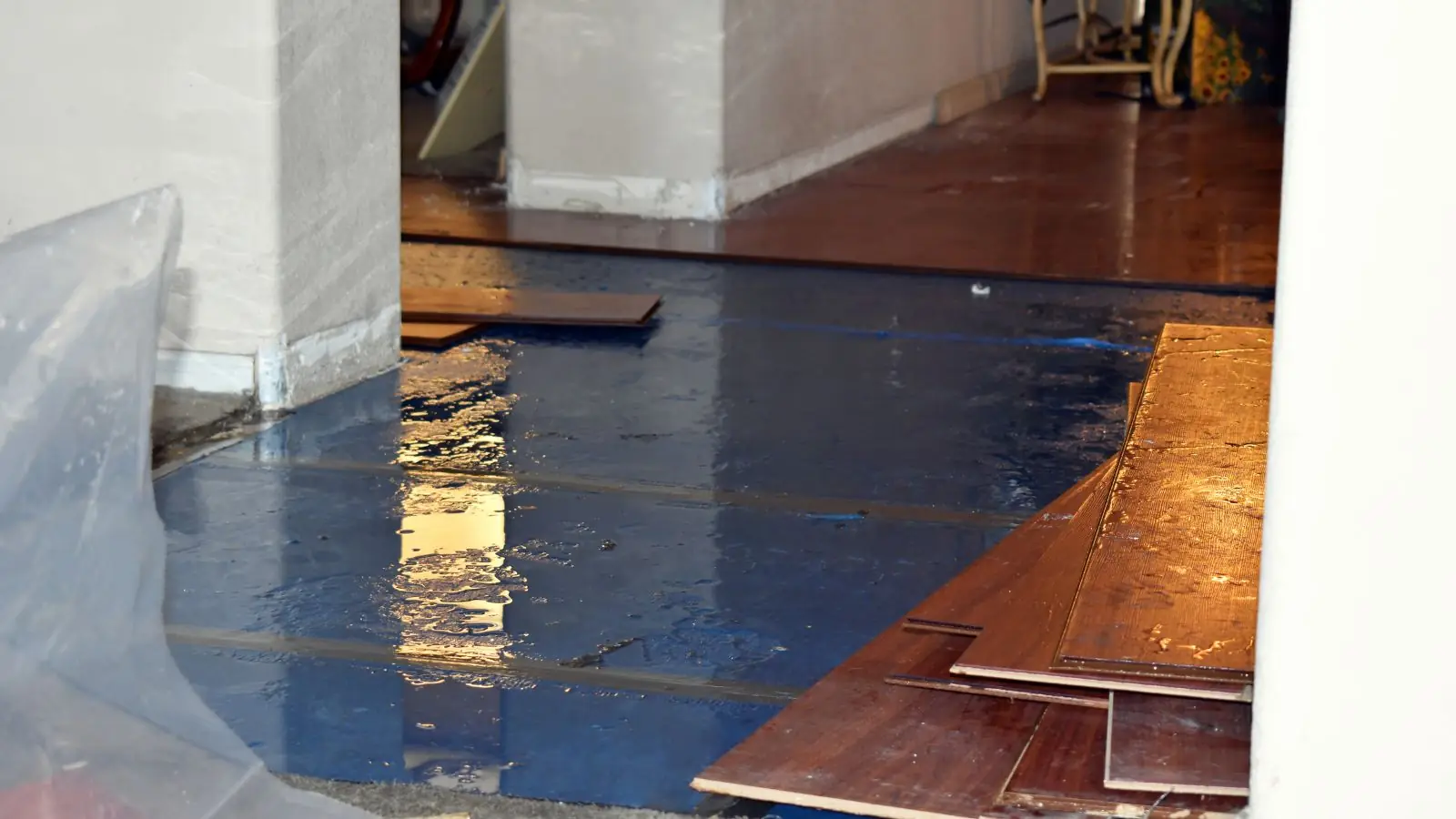
Wood remembers water, so go slowly
To fix water damaged wood in La Verne, CA, remove the moisture gradually and then repair what stayed deformed. Wood absorbs water into its fibers and swells. If it dries evenly, much of that movement reverses. If it dries too fast or stays wet too long, it warps, stains or rots.
The first hours matter most. Stop the source, mop up standing water, lift rugs and furniture off wet wood, and get air moving. Do not aim a heater at a floor or pry boards up before you know what is underneath.
Drying wood well is part of the ANSI/IICRC S500 water damage standard, and any company you hire should be able to say whether its crews work to it.
Which wood, which fix
Different wood fails in different ways. This table matches each common situation to the usual repair path.
| Wood item | What water does | Usual repair path |
|---|---|---|
| Solid hardwood floor | Cupping, then crowning, gapping or buckling | Slow dry, wait for moisture to settle, then sand and refinish, or replace buckled boards |
| Engineered floor | Edges swell, layers separate | Often replaced, since the thin top layer does not recover |
| Laminate | Core swells at seams | Replace affected planks |
| Baseboard and door trim | Swelling, finish lifting | Dry and refinish solid wood, replace pressed fiber |
| Solid wood furniture | White haze, warped panels | Dry slowly, rub out haze, re-glue joints |
| Plywood or OSB subfloor | Swelling, delamination, odor | Dry and test, replace sections that stay soft |
A moisture meter reading tells you far more than appearance, and sewage or flood contact usually means replacement.
Floors first: cupped, crowned and buckled
Cupping means board edges are higher than centers. It usually comes from moisture on the underside. Crowning is the reverse and often follows sanding too soon. Buckling is boards lifting off the subfloor, a sign of heavy water.
Dry slowly and wait. Sanding a floor that still holds moisture can leave it flat today and gapped next month. Crews use air movers, dehumidifiers and sometimes floor drying mats, then recheck readings over several days before any sanding is planned.
Our water damage repair page covers how floor repair is scoped after the structure is dry.
A repair sequence for a wet wood floor
- 1
Extract and lift
Remove standing water, rugs and furniture. Lift pad and carpet off wood, and wipe wet surfaces.
- 2
Dry with controlled air
Run dehumidifiers with gentle air movement. Skip high heat, which can crack boards and trap moisture below.
- 3
Measure until stable
Check readings against a dry reference board each day until they level off at normal.
- 4
Sand, patch or replace
Sand and refinish if boards flattened, or swap out buckled sections and blend the finish across the room.
Trim, furniture and the hidden subfloor
Baseboards often show the first sign of a leak. Solid wood trim can be popped off, dried and refinished. Pressed-fiber trim usually cannot be saved. Pulling baseboard also lets you see whether the wall cavity behind it is wet.
For furniture, move it onto blocks, wipe it down and let it dry in moving air out of direct sun. White haze in a finish can often be rubbed out after drying. Warped solid panels may flatten again, but veneered pieces tend to peel.
Subfloor is the part nobody sees. Plywood that stays soft, smells sour or shows dark staining needs replacement, and mold needs only moisture and wood to start. Slab homes have no subfloor on the ground floor, but raised foundations do, and a crew checks it with a meter.
Call the 24/7 line. We send licensed and insured crews with moisture meters, thermal cameras and drying equipment.
When wood should not be saved
If the water was sewage or came from outside, treat porous wood as contaminated and keep people and pets away. Wood that has been wet for days with a musty smell or visible growth is a mold question, and a physician is the right person for any health concern. Read about mold remediation before disturbing it.
Old wood in La Verne and the Weber House
The La Verne Heritage Foundation runs Heritage Park, home to the Weber House, which was built in 1885, moved to the park in 1979 and restored by the Foundation starting in 1985. Original wood in a house of that age is the kind that gets repaired and preserved rather than swapped out.
If your own home has older original wood floors, trim or built-ins, tell the crew before work starts. Solid old boards often take slow drying and refinishing better than modern thin-veneer products, and a careful crew will decide what to keep before pulling anything.
City water here runs hard, with city groundwater at 351.7 ppm, so wood near a slow leak may also carry white mineral residue after drying.
Source: La Verne Heritage Foundation website and Historical Marker Database entry for the Weber House, plus City of La Verne 2025 Water Quality Report.
Neighbors, towns and next steps
If your damage started with active flooding, call for emergency water removal before thinking about wood repair. Homes near the Glendora side can check our Glendora page, and those near Pomona can see our Pomona page for ZIP coverage.
Document the damaged wood with photos before anything is discarded, and ask your insurer before major permanent repair.
Questions about fixing wet wood
Often yes, if it was caught early and dried slowly. Cupped boards can flatten as moisture drops. Boards that are buckled or have stayed wet for days may need replacement.
Until moisture readings are stable at normal levels, often a few days to longer for thick boards. Sanding early can lead to gaps and re-cupping as the wood keeps drying.
Direct heat can crack boards and dry the top while the underside stays wet. Controlled air movement and dehumidifiers are safer. Let the readings set the pace.
Haze in the finish is often moisture trapped in the coating and can sometimes be rubbed out after the piece dries. Test on a hidden spot first. Warped or peeling veneer is harder to fix.
Soft spots, a sour smell, dark staining or squeaks that were not there before are signs. A moisture meter and, if needed, a small inspection opening confirm it. Slab homes do not have this issue at ground level.
Often yes. The Weber House at Heritage Park, built in 1885, was moved and restored, which shows older wood can be preserved. Ask the crew to assess original boards and trim before replacing them.
Sudden and accidental damage is often covered, and long-term leaks often are not. Check your policy and ask your insurer, and photograph everything before discarding anything.