

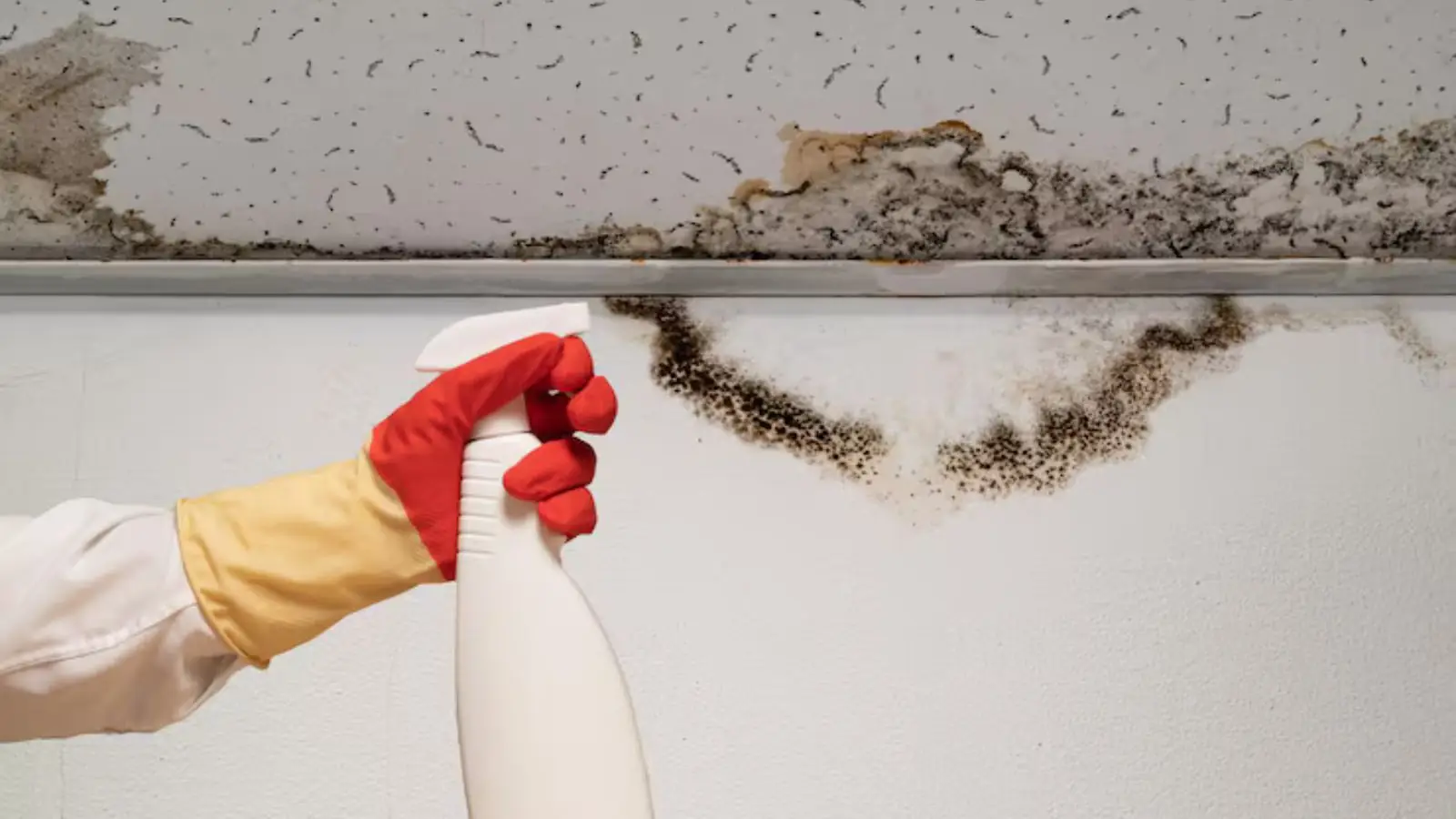
The short answer for a small ceiling spot
If the spot is smaller than roughly a dinner plate, the ceiling is dry, and it sits in a bathroom or a corner where steam collects, you can usually clean it yourself. Wipe the surface with a damp cloth and a little dish detergent, rinse the cloth often, dry the area completely, and then fix whatever kept the ceiling damp.
That last step matters more than the wiping. Mold needs moisture to grow, so a ceiling that stays damp will grow another spot even after a perfect cleaning. If the spot is large, soft, stained brown, or sits under a bathroom, roof or water heater, skip ahead to the section on when to stop.
Clean it yourself or call: a quick decision guide
Use this table before you pick up a sponge.
| What you see | Reasonable to clean yourself? | Why |
|---|---|---|
| A few dark dots in a shower-area corner, paint is firm | Yes | Surface growth from steam, usually fixed by drying and better airflow |
| Spotting along the edge where wall meets ceiling in a cold corner | Yes, if the area stays dry afterward | Often condensation on a cooler surface, not a leak |
| Spots in a ring or with a brown stain around them | No, find the leak first | The ring usually means water came from above and repeated wetting |
| Paint bubbling, drywall soft or sagging | No | Wet drywall holds moisture inside, and wiping the face does not reach it |
| Patch larger than about a bed pillow, or spread across several rooms | No | Large areas are where containment and S520-style practice apply |
| Ceiling below an upstairs bathroom or roof that recently leaked | No | The cavity above may be wet, so the surface is only part of the problem |
These are rules of thumb, not a diagnosis. A moisture meter tells you more than appearance does.
What to gather before you start
Keep the kit simple: dish detergent, warm water, two or three disposable cloths, rubber gloves, safety glasses, an N95-style mask, a step stool and a drop cloth.
Leave the bleach shelf alone for this job. Ceiling paint and drywall are porous, so the water in bleach soaks in while the rest sits on the surface. Never mix cleaners, and run the fan while you work.
Four steps for cleaning a small ceiling spot
- 1
Check that it is dry and firm
Press the paint gently with a gloved finger. If it feels soft, flakes in sheets, or the ceiling looks bowed, stop here and treat it as a wet ceiling instead.
- 2
Wipe, do not scrub
Use a barely damp cloth with detergent and move in one direction. Fold the cloth to a clean face often. Hard scrubbing and spray bottles push moisture and loose growth into the paint.
- 3
Dry it fast
Wipe with a dry towel, then run a fan or a box fan pointed at the ceiling for several hours. Damp paint is an invitation for the spot to return.
- 4
Bag and wash up
Seal the used cloths in a bag before they go in the trash. Wash your hands, then recheck the spot with a flashlight in a week.
Why bathroom ceilings grow spots in the first place
Warm steam rises, meets the cooler ceiling surface, and turns back into water. Do that every morning in a closed bathroom and the paint stays damp long enough for growth to start, especially in the corner farthest from the door.
Fans are the usual culprit. One that is weak, vented into the attic, or switched off the moment you step out leaves the moisture behind. Run it for roughly 20 minutes after a hot shower.
Bedroom corners behave the same way on cold exterior walls when furniture blocks airflow. Pull pieces a few inches off the wall.
Call the 24/7 line and we will talk through what you are seeing and send a crew with moisture meters and a thermal camera if the ceiling needs a proper look.
Stop and call if any of these show up
A ceiling that is soft, sagging, dripping, or stained in a ring means water is or was above it. Do not poke, scrub or cut into it, because disturbing wet or growth-covered drywall can send spores through the room.
Also stop if you smell a persistent musty odor with no visible spot, if the area keeps returning within weeks, or if the leak could involve sewage or electrical fixtures. For any electrical or gas concern, contact the utility or 911 first.
Find what is keeping the ceiling damp
Before you decide the job is done, trace the moisture. Check the bathroom fan, the caulk lines above a tub or shower enclosure, the roof area above the room, and any pipes or vents that run through the attic. Water heater closets and upstairs laundry rooms are common sources.
A moisture meter and a thermal camera can show a wet patch behind paint that looks fine. A crew can map the wet area and explain whether you need water mitigation to dry the cavity first or only a cleaning. Crews also serve nearby areas such as San Dimas and Claremont.
Insurance is worth a thought as well. Sudden and accidental leaks are often covered while long-term leakage often is not, so check your policy. California's Department of Insurance advises talking to the adjuster before cleaning suspected mold when long-term leakage is possible.
What a professional adds to the job
A crew treats a larger or wet ceiling as a contained project: plastic sheeting over the room, HEPA-rated air filtration, affected drywall removed instead of wiped, and debris bagged before it leaves. Ask any company whether its crews work to the published ANSI/IICRC S520 standard.
Cost depends on the size of the area, whether drywall must come out, how wet the cavity is, and how much rebuilding follows. Call us for a scope and price explanation for your own ceiling.
Homeowner repairs in La Verne
According to Census QuickFacts, about 69.2% of La Verne homes are owner-occupied, with a median owner-occupied home value of $817,000 (2020 to 2024). For an owner at that value, a ceiling stain deserves a proper look instead of a coat of paint, because hidden moisture is how small repairs become drywall replacements.
If a repair crosses the line into hired work, remember that California requires a contractor's license when a contract totals $1,000 or more in labor and materials, or when the job needs a permit. You can check any contractor's license on the state license board website, and ask your city building department whether your project needs a permit.
Source: U.S. Census Bureau QuickFacts for La Verne city, California, and the California Contractors State License Board licensing rules.
Questions about mold on ceilings
Plain detergent and water is the safer starting point for painted ceilings. Bleach does not soak into porous drywall and can leave extra moisture behind, and mixing cleaners can create unsafe fumes. If the stain keeps returning, the cleaner is not the problem, the moisture is.
Not always. A stain can be old and dry, but only a moisture meter can tell you. Soft paint, bubbling or dripping points to active moisture.
Only after the ceiling is completely dry and the cause is fixed. Paint over a damp surface traps moisture. A clean flashlight check a week later is a good test.
You cannot tell reliably by eye. Dirt and soot often smear dry, while growth tends to cluster where it stays damp, but appearance alone is a guess. A lab sample is the only way to identify it, and a professional can say whether sampling would help your situation.
The city's 2025 water quality report shows La Verne water is mostly purchased supply with a share of local well water, and its hardness leaves mineral film on tile and glass. That film is separate from ceiling growth, but a damp bathroom grows both, so ventilation helps with each. If you suspect a supply leak, shut your main valve and call city utilities customer service.
Call when the patch is large, the drywall is soft, there is a ring stain, or the ceiling sits under a roof or upstairs plumbing. A crew can check the cavity with moisture meters before anything gets cut.