

The short version
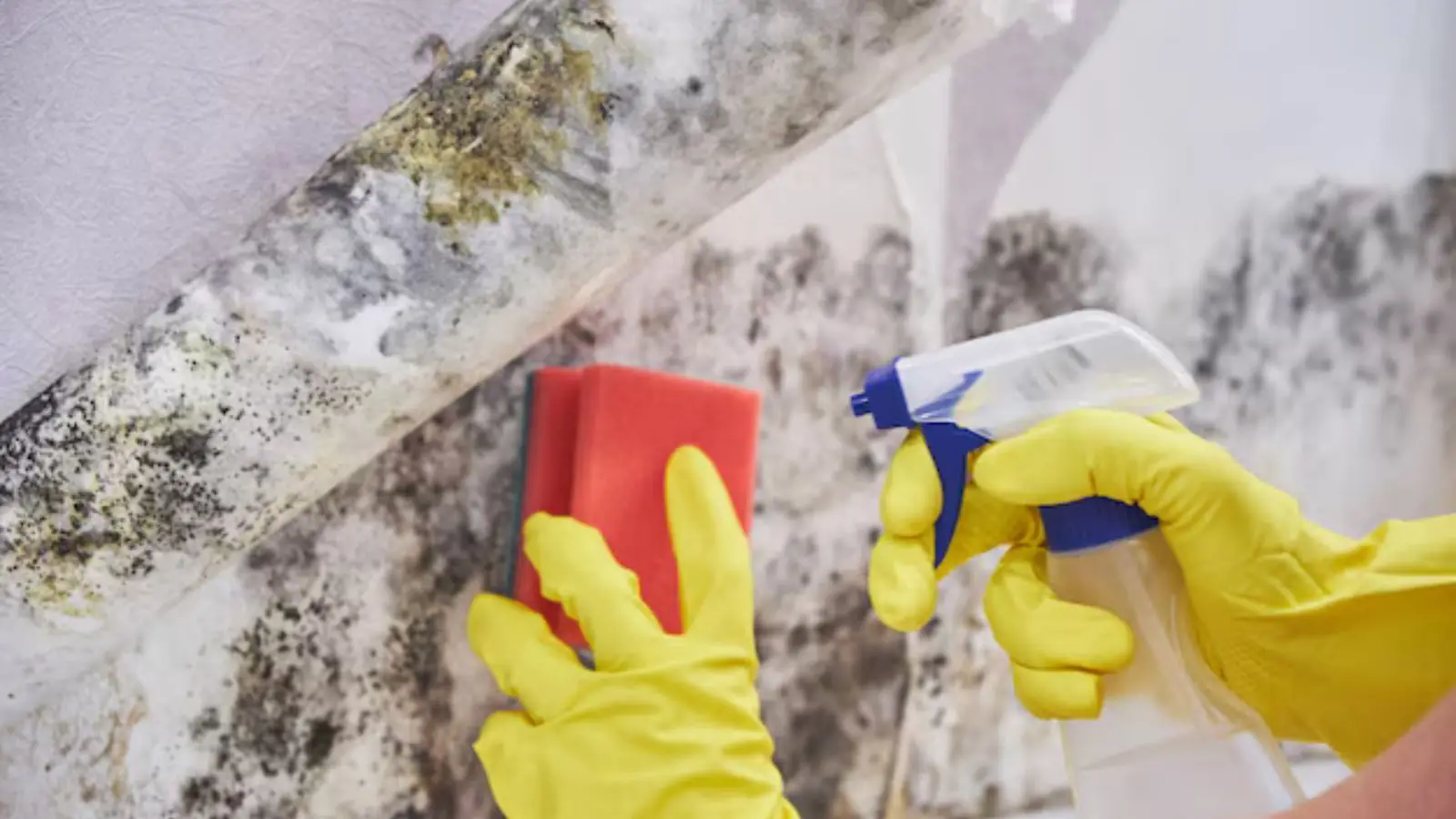
For a shower with dark spots on caulk, grout or the curtain, scrub with dish detergent and a soft brush, rinse well, and dry the whole stall. Replace caulk that stays dark, because the growth sits in the caulk itself. Then run the exhaust fan for about 20 minutes after every shower.
In La Verne there is a second job: hard water scale. Mineral film holds moisture and gives growth something to cling to, so a shower with scale tends to stay dirty longer. Clearing the minerals and keeping surfaces dry does more than any cleaner brand.
A cleaning routine that works
- 1
Ventilate and gear up
Turn on the fan, open a window, and put on rubber gloves, safety glasses and an N95-style mask. Never mix cleaners, and keep bleach away from vinegar and ammonia.
- 2
Remove scale first
Spray white vinegar on glass and fixtures, wait 10 to 15 minutes, and wipe. Keep vinegar off natural stone, which it can etch. Scale removed means the next cleaner contacts the surface instead of the mineral film.
- 3
Scrub the growth
Use dish detergent and a soft brush on tile and fiberglass. An old toothbrush handles grout lines. Rinse thoroughly with clean water.
- 4
Dry everything
Squeegee walls and glass, wipe the floor and the curb, and leave the door or curtain open so air can move. A dry stall is the best prevention you have.
Caulk: clean it or replace it
Caulk is a flexible seal, and it is the most common spot for dark growth. Surface spots can often be scrubbed away. If the caulk is black through its thickness, cracked, peeling, or pulling from the tub, it has failed and needs to come out.
Cut out the old bead with a utility knife or a caulk-removal tool, clean the joint, let it dry fully for a day, and apply a fresh bead of silicone caulk made for kitchens and baths. Caulk applied over damp or dirty surfaces fails fast.
Which surface needs what
Showers have a mix of materials. This is how each usually gets handled.
| Shower part | Typical problem | Usual fix |
|---|---|---|
| Glass door | White film and dark streaks | Vinegar for scale, then detergent, squeegee after use |
| Grout lines | Dark staining, powdery surface | Stiff brush and detergent, reseal after it is dry |
| Caulk at tub or corners | Black spots, cracks, gaps | Scrub if surface only, replace if black through |
| Shower curtain or liner | Pink or black spots | Launder or replace |
| Fiberglass or acrylic | Dark patches in textured areas | Soft brush and detergent, no abrasives |
| Wall outside the stall | Paint bubbling, soft drywall | Stop and check for a leak |
A crew can confirm with a moisture meter and a thermal camera where the wall is wet.
Hard water and why it matters in La Verne
The City of La Verne's 2025 water quality report lists local groundwater hardness at 351.7 ppm as calcium carbonate, with a reported range of 290 to 450. Purchased supply from Three Valleys Municipal Water District was reported at 97 ppm. Water quality scales often call anything above about 180 ppm very hard.
The report gives the city's source mix but does not say which blend reaches a particular street. If you see a white crust on the showerhead within weeks, you are probably dealing with harder water, and descaling is part of cleaning your shower. A shower filter or a water softener may help the scale, but ask a plumber and your city utility about what suits your home.
Call the 24/7 line. We send a crew with moisture meters and a thermal camera to check whether a hidden leak or wet drywall is behind the tile.
Ventilation that actually removes moisture
A bathroom fan is rated by airflow, and it only works if the duct goes outside. Check that the fan pulls a tissue firmly to the grille, and that the vent cap outside opens when the fan runs. A fan that exhausts into the attic puts the moisture right above your ceiling.
Run the fan during the shower and for about 20 minutes afterward. A timer switch makes this automatic. Leave the bathroom door open after, wipe wet surfaces, and hang towels outside the room.
Signs the shower problem is bigger than mold
Stop cleaning and call if tiles are loose, grout crumbles, the floor flexes, the drywall outside the shower is soft or stained, or a musty smell lingers after you have cleaned. Those signs often mean water is getting behind the finished surface.
Do not cut into the wall yourself. Disturbing growth-covered drywall can send spores through the house. If there is any electrical concern near wet fixtures, contact your utility or 911 first.
When to call a crew, and what it involves
If a shower leaks behind the wall, the work is drying first, then removing damaged drywall and then rebuilding. Equipment includes moisture meters, thermal cameras, air movers and dehumidifiers, and larger growth areas are contained and filtered following the published ANSI/IICRC S520 standard. Ask any company whether its crews work to it, and ask whether California licenses mold work. See our mold remediation page for how that works.
Cost depends on how much wall or floor is wet, the materials, how many days of drying are needed, and the rebuild scope. Call us for your own scope and price explanation. Sudden and accidental leaks are often covered, long-term leaks often are not, so check your policy. We also send crews to Claremont and San Dimas.
La Verne water, scale and your shower
According to the City of La Verne's 2025 water quality report, about 24% of city supply is local groundwater from city wells and about 76% is purchased from Three Valleys Municipal Water District. The groundwater share is the harder water, at 351.7 ppm, while the purchased water is softer at 97 ppm.
The tie-back is practical: expect more scale on fixtures and glass than a softer supply would leave, so descale monthly or so and keep the shower dry. For supply questions, call city utilities customer service, since no dedicated emergency line is published.
Source: City of La Verne 2025 Water Quality Report (public water system 1910062).
Shower mold questions
Pink or orange film is often a bacterial residue, not mold, but you cannot tell from color alone. It cleans off with detergent and a brush. If it returns fast, work on drying and ventilation.
Bleach can lighten stains on hard tile and grout, but it does not fix moisture. Use it alone, never with vinegar or ammonia, and ventilate. Detergent and scrubbing remove growth just as well.
There is no fixed schedule. Replace it when it is cracked, peeling, or black all the way through. Dry the joint fully before applying new silicone.
The city's 2025 report lists groundwater hardness at 351.7 ppm, which scales commonly rate as very hard. Purchased supply is 97 ppm. Which blend reaches your tap can vary, so ask city utilities customer service.
Look for loose tile, soft grout, stained or bubbling drywall on the other side, and a musty smell. A moisture meter and thermal camera can confirm it without cutting. Stop using the shower if you suspect a leak.
Cleaning removes what is there, but mold needs moisture, so it can return if the shower stays damp. Ventilation, dry surfaces and sound caulk reduce the conditions it needs. No cleaning routine can promise it stays away.