

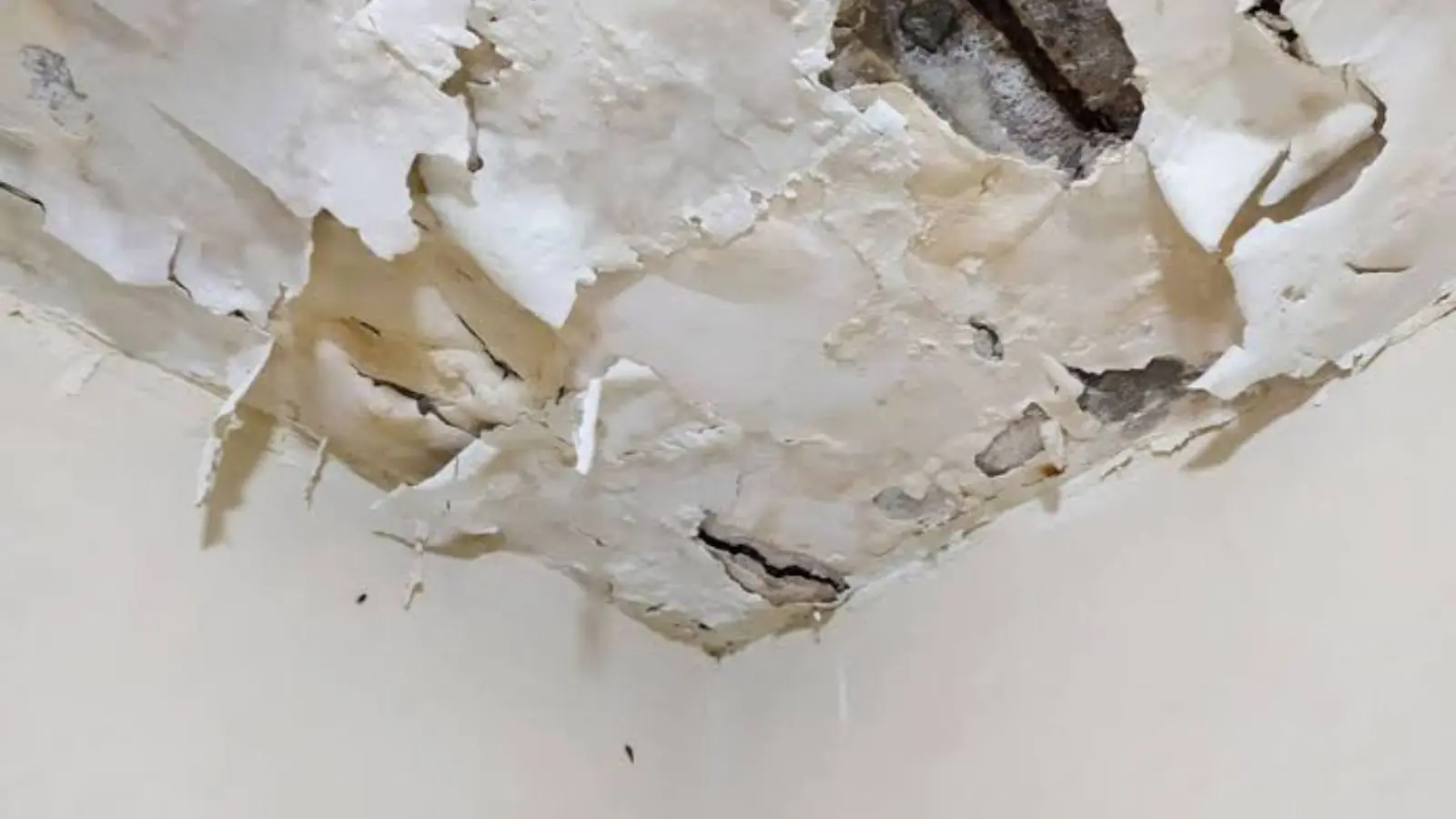
A wet ceiling is a safety problem first
A ceiling damaged by water in La Verne, CA can look like a faint brown stain or a heavy sagging belly. The sag is the dangerous version. Wet drywall can weigh far more than dry, and water pooled behind it can come down at once.
Move people and pets out from under it, shut off the main water valve if the source is a supply line, and keep the area clear. If water is near light fixtures, treat the ceiling as electrically live.
The published ANSI/IICRC S500 standard guides how crews handle water losses, so it is fair to ask any company whether its crews follow it.
What to do in the first hour
- 1
Clear and protect
Move furniture and valuables out of the room, or cover them with plastic. Put buckets under drips.
- 2
Stop the source
Shut the main valve for a plumbing leak. For a roof leak, stop what you safely can from inside and do not climb a wet roof.
- 3
Cut power if safe
Turn off the breaker for the room only if you can reach the panel dry. If not, stay out and call the utility or 911.
- 4
Photograph everything
Record the ceiling, the floor, belongings and any visible source before anything is moved or discarded.
Do not stand under a sagging ceiling
If the ceiling is bulging, do not poke it from directly below. Water or debris can drop suddenly. Stay to the side and call the 24/7 line, or call the utility or 911 first for any electrical or gas risk.
Relieving a bulge without making a mess
A small hole in the lowest point of a bulge can let trapped water drain into a bucket in a controlled way. Put the bucket under the spot, stand to one side and use a screwdriver to make a hole about the size of a pencil. Large bulges are better left to a crew.
Never do this if you suspect electrical wiring above the area or if the water may be contaminated. A relieved ceiling still needs drying, and the hole is just a way to reduce the load.
Stain, sag or hole: what each tells you
The ceiling's appearance hints at the cause, how fast it is moving and how likely replacement is.
| What you see | What it often means | Usual repair path |
|---|---|---|
| Light brown ring, dry to the touch | Old or slow leak, possibly inactive | Find source, confirm dry, prime and repaint |
| Stain that grows or darkens | Active leak above | Find and fix source before any repair |
| Bubbled paint, soft drywall | Water absorbed into gypsum | Cut out the soft section and replace |
| Sag or bulge | Water pooled above, drywall weakened | Relieve safely, remove the section, dry the cavity |
| Water stain below a bathroom or upstairs unit | Supply or drain leak overhead | Plumber first, then dry and rebuild |
A stain that comes back after painting means moisture is still reaching it.
Call the 24/7 line. We send licensed and insured crews to extract water, set drying equipment and tell you what can be saved.
From wet ceiling to finished ceiling
After the source is fixed, the repair follows the usual sequence: dry the cavity, remove failed drywall and wet insulation, check framing and then rebuild. Ceilings add one wrinkle, which is texture. Matching popcorn, knockdown or orange peel texture takes practice.
Because ceilings are visible across a whole room, painters often paint the entire ceiling, not a patch, to avoid flashing. See our water damage repair page for how rebuild scope is described.
For a ceiling that needs the structure dried first, emergency water removal and drying equipment come before any cutting.
Mold and the attic or floor above
A ceiling stain can also point to an unseen wet space above, such as attic insulation or a joist bay. Mold needs moisture and something to feed on, and wet insulation sitting against wood can supply both.
If you see dark spotting or smell something musty, avoid scrubbing it. California's Department of Insurance advises talking to the adjuster before cleaning suspected mold when long-term leakage is suspected. See mold remediation for how containment works. Health questions go to a physician.
La Verne paperwork: who to ask about permits and licenses
California requires a contractor license when a job totals $1,000 or more in labor and materials, or when it needs a permit. A ceiling rebuild after water damage can pass that figure quickly once drying, drywall, texture and paint are added. You can check any contractor's license on the CSLB website.
The research for this site did not find a published building permit authority for La Verne, so ask your city building department whether your ceiling repair needs a permit. City Hall is at 3660 D Street, La Verne, and its main line is (909) 596-8726.
Keep that call and your insurer calls in a log with dates. The California Department of Insurance advises keeping a log of calls and copies of correspondence.
Source: California Contractors State License Board licensing requirements, California Department of Insurance residential claims guidance, and City of La Verne website.
Nearby towns and next steps
If you live just outside La Verne, see our Claremont page or Glendora page and check which lists your ZIP code. Report the loss to your insurer promptly, keep receipts for emergency steps, and do not discard the damaged drywall before the adjuster has had a chance to inspect.
Wet ceiling questions answered
Only a small hole at the lowest point, with a bucket below and you standing aside, and only if no electrical wiring is likely above. Large bulges and contaminated water are better left to a crew.
There is no reliable timeline. Wet drywall loses strength and pooled water adds weight, so treat any sag as urgent and keep people out from under it.
Only after the source is fixed and the ceiling reads dry. Use stain-blocking primer. If the stain bleeds through again, moisture is still present and needs another look.
No. It can come from a plumbing line above, an air conditioning drain or condensation. A moisture meter and thermal camera help trace the path, and a plumber or roofer fixes the source.
Not always. Small, clean, dry stains may only need primer and paint, and soft areas can be cut out and patched. Painters often repaint the whole ceiling so the finish matches.
Ask your city building department. City Hall is at 3660 D Street and the main line is (909) 596-8726. California requires a contractor license for jobs of $1,000 or more or those needing a permit.
Sudden and accidental damage is often covered, and long-term leaks often are not. Check your policy, report promptly and let the adjuster inspect before major permanent repair.