

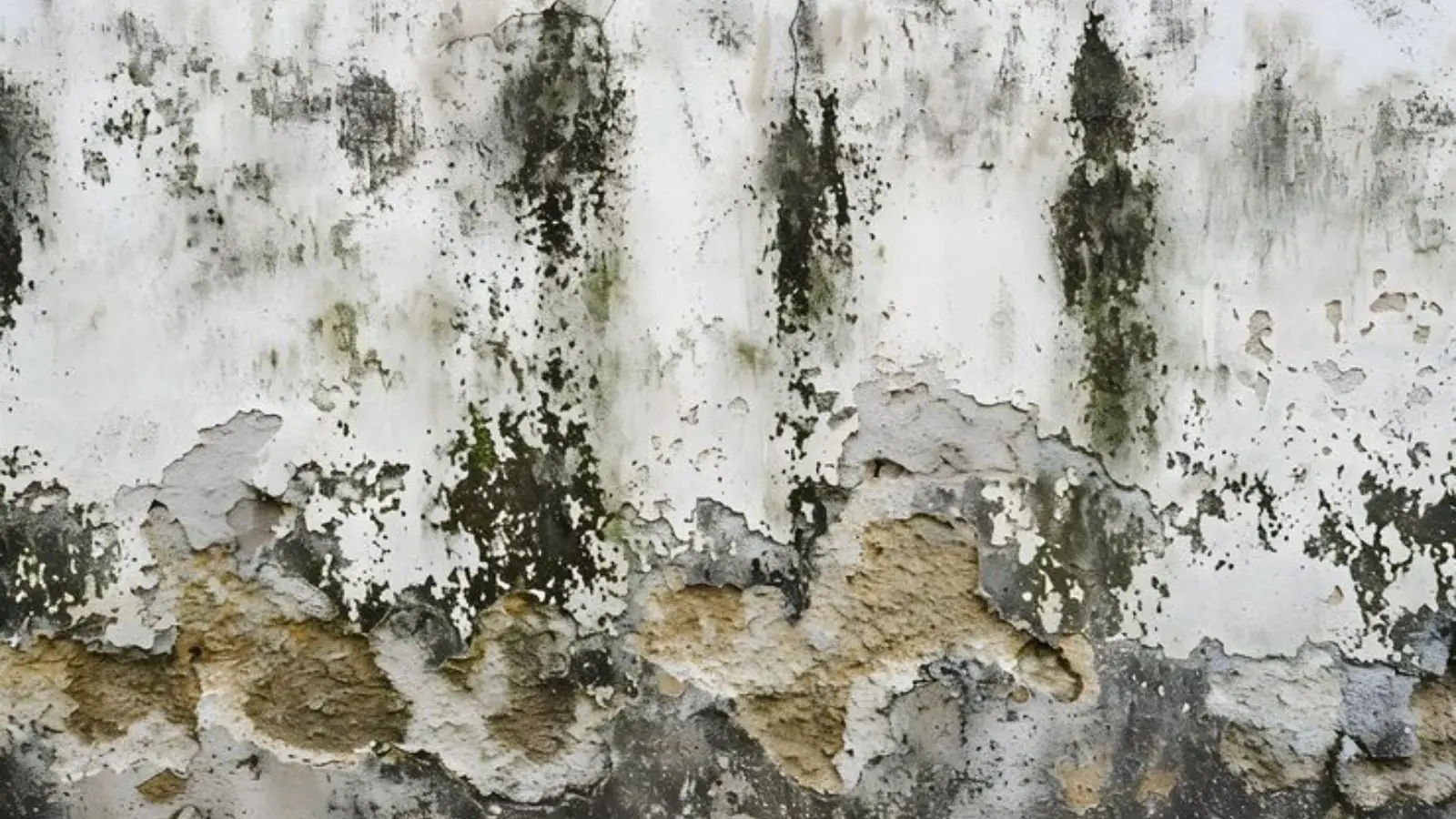
The answer first: you cannot sort them by color
Mildew is a casual word for surface mold, usually flat, powdery or fuzzy growth on a damp bathroom or window area. Black mold is a casual word for any dark growth, and it is not one single species. Many kinds of mold look black, green, gray, white or brown depending on the material and the stage of growth.
So a black spot is not automatically worse than a gray one, and a gray one is not automatically harmless. What matters for your house is the same in both cases: where the moisture is coming from, how big the area is, and what material the growth sits on. Questions about how any mold affects a person's health belong with a physician.
How the two usually show up
These patterns are common but not reliable. Treat the table as a description of what people see, not a way to name a species.
| Feature | What people call mildew | What people call black mold |
|---|---|---|
| Typical look | Flat, powdery or downy, often white, gray or light brown | Dark green, brown or black patches, sometimes slimy or speckled |
| Where it sits | Shower corners, window sills, tile lines, damp fabric | Wet drywall, ceiling tiles, wood framing, areas that stayed wet for days |
| How it behaves when wiped | Often lifts from a hard surface | May leave a stain behind even after the surface wipes clean |
| What it suggests | Regular dampness or humidity | Longer or heavier wetting, but not always |
| What to do first | Dry the area and clean hard surfaces | Find the water source, then judge the extent before touching it |
A house can have both at once, and different molds can grow side by side in the same patch.
Why color misleads people
Growth changes color as it matures. A patch that starts pale can darken as spores form, and the same mold can look different on tile than on wood. Soot, dirt, soap scum, dust and rust stains also pass for mold, and sometimes the reverse is true.
Because of this, reliable naming takes a lab. A lab can report what genus a sample contains, but the result still does not tell you whether the area needs to come out. That decision depends on the amount, the material and how wet the building was, which is why a crew measures moisture instead of guessing from the shade.
Follow the moisture, because that is the real tell
Every kind of mold needs water to grow. When you find growth, the useful question is not whether it is black but why that spot was wet. Look for a pattern that fits a source: a ring below a roof area, spotting along a cold exterior wall, growth behind a toilet or under a sink, or a musty smell from a closet near a wall with plumbing.
A moisture meter reading and a thermal camera scan let a crew separate surface condensation from a wet wall. If you have a leak, water damage repair and drying often come before any mold cleaning. Without that order, the growth tends to return because its water supply never stopped.
Clues that point to a moisture problem, not just a dirty surface
Any one of these deserves a closer look. Two or more together suggest a leak or ongoing dampness.
Look for these
- Growth in a ring or a clear line below a roof, upstairs bath or water heater
- Paint that bubbles, peels or feels soft under pressure
- A musty odor that gets stronger when the room is closed up
- Warped baseboards, cupped flooring or swollen cabinet bases
- Growth that comes back after cleaning in the same spot
- Wall surfaces that feel cool or damp to the touch
Call the 24/7 line to talk it through. We send a crew with moisture meters and a thermal camera to find the wet area before anyone scrubs or cuts.
What testing can and cannot tell you
Surface and air samples
Tape lifts, swabs and air samples go to a lab. They can show whether elevated spore types are present compared with outdoor air. They cannot say whether a particular household member will react, and they cannot tell you the cause of the moisture.
Moisture mapping often matters more
Because mold needs water, finding and mapping wet materials is usually the most useful measurement. After remediation, some homeowners hire an independent tester for clearance sampling, which should be someone other than the company doing the work. Ask any company whether its crews work to the published ANSI/IICRC S520 standard, and ask whether California licenses mold work or whether only the contractor's general license applies.
Small growth you can handle, and when to stop
A small patch of mildew on tile, grout or a shower door can be cleaned with detergent and a brush, then dried well. Wear gloves, glasses and a mask, and ventilate the room. Do not use a stiff brush on drywall or ceilings, because scrubbing can loosen spores into the air.
Stop and call when the growth covers a large area, sits on soft or crumbling material, appears after a leak, or keeps returning. In those cases, the next step is stopping the water, drying the building materials, and then deciding what to remove. A crew near you in Pomona or Glendora works the same way as one in La Verne.
For insurance, sudden and accidental water damage is often covered while long-term leaks often are not. Check your policy, take dated photos, and call the adjuster before cleaning if leakage may have been going on for a while.
Dry weather and indoor moisture in La Verne
A City of La Verne newsletter from February 2023 reported that the city was in moderate drought, with a 20% water-use reduction compared with 2020 and watering limited to one day a week. A dry year outside does not make a house dry inside, because bathrooms, laundry, plumbing and roofs create their own moisture.
The practical tie-back is irrigation. Even on a reduced watering schedule, sprinklers that spray stucco or hit foundation vents add water near the walls. Aim spray heads away from the house and check cold corners inside for spotting after a watering day.
Source: City of La Verne newsletter, February 2023 issue, citing the U.S. Drought Monitor (NIDIS) drought status for January 2023.
Black mold and mildew questions
No. Color does not tell you which species you have or what any health effect might be. Health questions belong with a physician. From a building standpoint, the size of the area, the material and the moisture source decide what to do.
A kit can confirm that mold spores are present, which is true of nearly every home. It cannot tell you where the moisture is or whether materials need removal. A moisture meter and a visual inspection often answer more useful questions.
Bleach does not reach inside porous drywall, and the water in it can add moisture. Wet or growth-covered drywall is usually cut out and replaced instead of wiped. Hard, nonporous surfaces like tile are different and can be cleaned with detergent.
No. The city reported drought restrictions in early 2023, but indoor sources like plumbing, showers and roof leaks do not depend on rainfall. Check irrigation spray near walls and any recent leak, and ask the city building department if your repair needs a permit.
No. A crew can start with a visual check and moisture readings. If testing helps your situation, such as before a home sale or after remediation, they can explain what samples can and cannot show.
Some molds leave pigment in porous paint or wood even after the growth is gone. A stain without softness, odor or moisture may be cosmetic, but a moisture meter reading is the way to confirm that.